Cults & Colonialism in Jack MacGregor’s Prophets
Scottish playwright Jack MacGregor speaks to us about the psychology of belief in their cult thriller Prophets, premiering at this year's Edinburgh Fringe
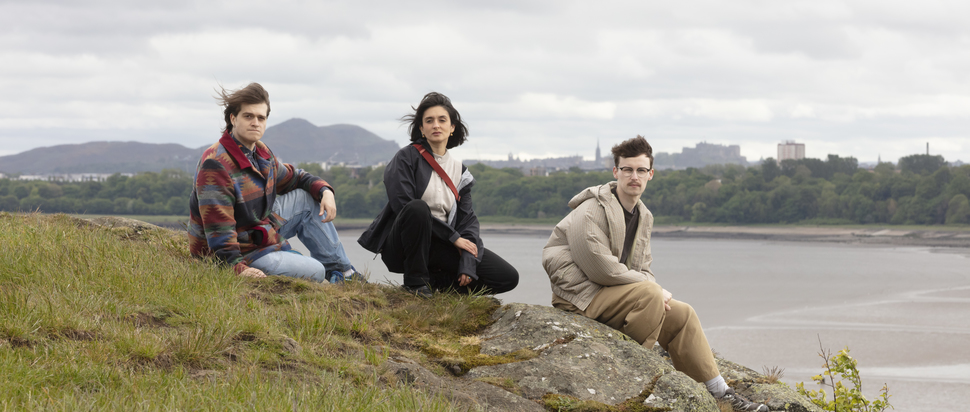
Fringe artists this year are challenging us to believe in something; in some cases, to surrender ourselves. It is a sign of the times that cults are a theme at the Fringe. The grey clouds of political, economic and social volatility cloak the way we live and people are increasingly searching for certainty and somewhere or something higher to belong to. Dark comedies and absurdist satires hold festival programme space with dramatic thrillers – and Jack MacGregor's Prophets is one of the genre that comes highly anticipated.
MacGregor is making their mark in indelible ink on Scottish theatre and has form in bringing provocative narratives to the Fringe. They won a Scotsman Fringe First Award in 2023 for Everything Under the Sun, a drama interrogating imperialism, peacekeeping in war-torn Mali, and the conflicting values of institutions tasked with securing and holding that peace.
Theatre is a place of living ideas. A place that mirrors our evolving world. MacGregor's new writing in Prophets provokes us all to look at the reflection. At a time of acute political, economic and social turmoil, cults offer a strong sense of community, rules-based order and populist answers to complex problems. Past is prequel. “We live in a time of cults that mirror the conditions of the 1970s – oil shocks, inflationary spirals, political corruption,” MacGregor explains. “People are seeking alternative models of belief to anchor their worldview. This is what cult offers – certainty.”
Prophets has sharp political under- and overlays. The play is a two-hander set on the remote and rocky colonial outpost of Saint John gripped in the thrall of a charismatic and growing religious sect. The day of paradise is drawing closer and researcher Kerris (Rebecca Wilkie) is caught in an undercurrent of violent belief.
MacGregor is picking up the mantle from authors such as Margaret Atwood who explore concepts of 'freedom to' and 'freedom from' – the philosophical divide between personal liberty and authoritarian control. The fundamental questions at the heart of Prophets consider who makes the decisions in our lives, and how much agency and autonomy we actually have.
“I think the conflict of the play is an argument of free will versus prophecy,” MacGregor says. “The cult on the island proposes a radical form of predestination, whereby everything happens for a reason. Every action is the manifest will of God. Human beings have no free will and justify all action on the basis of divine plan.”
Islands are natural closed rooms for thrillers. The playwright, who is from the north of Scotland, sees Prophets as a contribution to the micro-genre of Scottish island plays such as Further than the Furthest Thing by Zinnie Harris. The play, in some ways, is also an inversion of the classic folk horror story, The Wicker Man. “Instead of a religious police officer on a Scottish island investigating a pagan cult, an agnostic scientist from Scotland travels to an extremity of the British state and confronts a distortion of charismatic evangelical Christianity,” MacGregor explains.
Saint John is a tiny, remote, fictional British Overseas Territory – but the setting is steeped in the real-world geopolitical context of the growing militarisation of the Indo-Pacific and the diplomatic dispute over the Chagos Islands. “I wanted to talk about the tension in the Pacific while also creating a spiritual drama that feels so human and character-driven,” MacGregor adds. The drama is directed by Fraser Scott and produced by Leah Byrne, whom they praise for their attunement to the tense humanity of the play.
“Fraser understands that theatre is about show – do not tell. I love the way he can make a scene so active and full of choices,” MacGregor says. Meanwhile, set designer Emma Moran creates an intimate world of water, earth and rock in Assembly's Roxyboxy. “Emma understands texture and tone, and how a play needs to lay out an invitation as soon as you walk in. I want audiences to feel the vibe shift as soon as they walk in.”
Prophets surfaces lasting questions for audiences on faith and secularism, free will and predetermination, isolation and belonging, the search for certainty and community, and the mechanisms of power and control that underpin faith and empire. When it comes to something as esoteric and personal as a cult, MacGregor argues there are some things that cannot, or should not, be undeniably understood.
“I think certainty can kill the art," they say. "Imagine how boring things get if there is only one big question with one big answer."
Prophets, Assembly Roxy (Roxyboxy), 5-31 Aug, 5.45pm; a print edition is released on 19 Aug via Bloomsbury, with copies available at performances during the Fringe run