Parasocial Activity: Chloe Petts and John Tothill on audience intimacy
Not a new phenomenon, but one widely felt by comedians at the moment, parasocial relationships with audiences and fans are keeping Chloe Petts and John Tothill on their toes

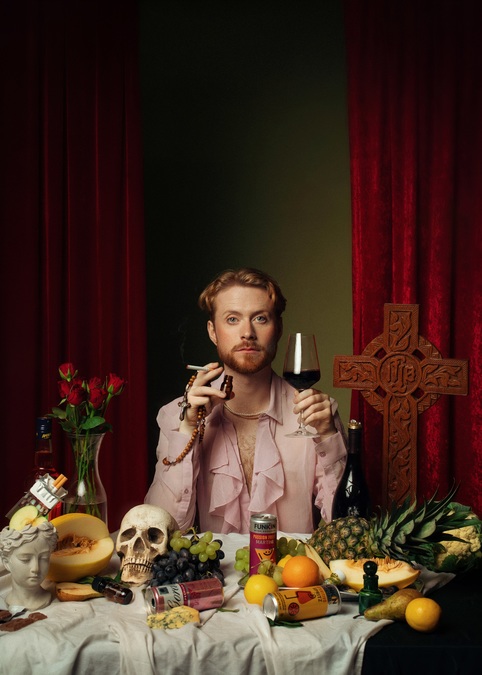
We think we know stand-ups: it's an art form that encourages a sense of intimacy, and we can forget that carefully crafted stage personas are distinct from the messier reality of fully rounded, flawed human beings. Throw podcasts into the mix – hour upon hour of easy conversation piped into listeners' ears – and boundaries can't help but become an issue. We asked Chloe Petts and John Tothill about their experiences with audience expectations, from the importance of framing to the distorting effects of celebrity on fan behaviour.
As a queer performer speaking about queer issues, Petts thinks that the dynamic can't help but forge a certain kind of intimacy. “We are speaking so many truths that queer folk need to hear, which they're not hearing in mainstream society,” she says. It's tempered by the fact that the queer community is very mindful of consent. Petts mentions the much loved – and missed – Trusty Hogs podcast (helmed by Helen Bauer and Catherine Bohart), which did great work in educating their listeners about “being a kind and respectful audience,” and getting comedians “talking about what feels good and what doesn't feel good after a show.”
That being said, however, Petts does feel the injustice of being held to a different standard from others – the way an off-the-cuff remark can be judged or taken out of context. She mentions one experience which clearly rankles. At the end of a long tour, with bronchitis, she went ahead with a two-show day, not wanting to let anyone down. Using a tried and tested opening, Petts asked “Any butch lesbians in?” heard a few people cheer, then went “Oh there’s a few butch lesbians in and there's a few liars.” Seeing a cluster of queer people in the darkness, Petts waved to them; one waved back and she quipped “don't wave at me you lovely little butch.”
Afterwards she received three lengthy complaints which accused her of misgendering and belittling the trans community. Petts felt really wronged and upset: “I'd been up and down the country promoting trans rights and trans issues in the show and I make one mistake... But then I thought ‘the trans community is in such fight or flight at the moment ...people are being really shitty to them, so why wouldn’t I be as well.’ I had to reason it that way.”
The incident Tothill muses upon is less fraught, but still gives him pause for thought. At a recent corporate gig, he was doing his “usual nonsense” (aka delightfully flirty crowdwork): asking “Where are we all going for drinks after?” then was taken aback when the audience duly did expect to go out with him post-show. His “elevated persona” is very distinct from other, more confessional stand-ups, and usually ensures the intimacy is read as artifice, but in this case, with a less comedy-literate audience, he felt guilty at having “actually misled them.” He says that he probably won't risk that line again, especially if “we're taking the same exit!”
The parasocial dynamic is not new: “I'm sure in the past people thought of Terry Wogan as a friend,” Tothill says, but driven by podcasting and social media, “it's a modern phenomenon in its intensity.” He's an avid podcast listener himself – and recognises the slippage involved: “I mean, I think of Dominic Sandbrook and Tom Holland as friends!” It's as much a question for listeners as it is for the artists, he suggests. Given the majority of people have a healthy relationship with performers, with only a fraction developing unhealthy parasocial or even stalker-style relationships, “it shouldn't be an occupational hazard that has to be accommodated”.
And if confusion about intimacy is one issue, Petts foregrounds something a little different: those occasions when people “come up to you wanting to show you something - like they're funny, too and that can be a bit difficult, because, after all, we're not in a battle here”. It's not necessarily a competitive thing either: “People often just don't know how to behave around those they perceive to have celebrity.” She's been at parties where conversation disintegrates once other partygoers realise she's been on the telly – and finds they can no longer string a sentence together.
After four Fringe shows in as many years, Chloe Petts has finally given herself a year off the Fringe in 2026, so make sure to catch her on tour in March (The Stand, Edinburgh, 4 Mar; The Stand, Glasgow, 5 Mar)
John Tothill and his gorgeously flamboyant alter-ego will also be touring in 2026 (Monkey Barrel, Edinburgh, 21 Feb; Oran Mor, Glasgow, 20 Mar), just remember: he'll not be up for post-show drinks