Turn On, Tune In, Dance Out: zolf on Dataclash 2
Ahead of the return of Dataclash, zolf talks digital spaces, livestream culture and the importance of club production
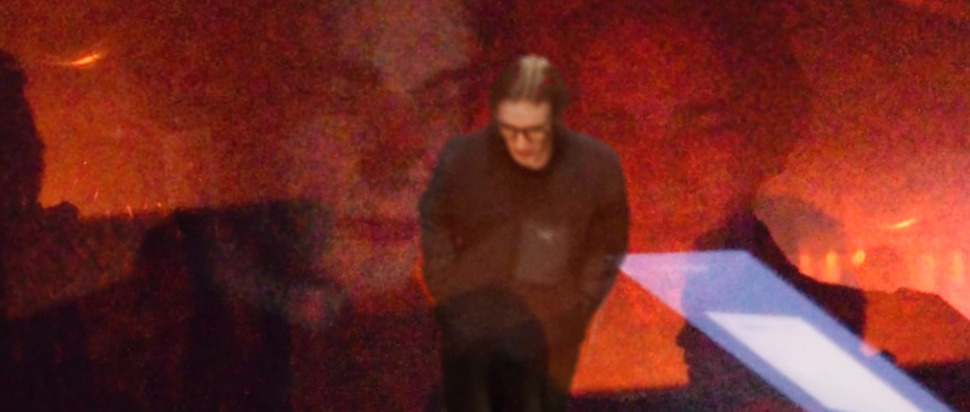
Over two nights in mid-December 2023, producer, DJ and sound design student zolf broadcast Dataclash to the world by means of YouTube livestream. Having wrapped up his second year assignments, zolf formed a collation of audiovisual works created by friends – both online and off – spliced together with weird and wonderful interludes. Each Dataclash set took a turn down a different creative path: field recordings taken in the recesses of a supermarket, psychedelic visuals paired with breakneck jungle, weighty dubstep overlaid with blown-out video game play. In anticipation of Dataclash 2, we speak to zolf about the blurring of the physical club and the digital abyss.
zolf first encountered audiovisual livestreams in 2020 during the COVID-19 pandemic. With public spaces closed indefinitely, online communities exploring music, art and digital culture opened up to him. “I was 16 and shut in the house on my computer every day doing schoolwork,” he says, “[I was] researching tons of stuff and that's how I found all these crazy concepts.” The discovery of livestreamed shows led to zolf finding the communities behind them. “[Each show] always had their little community and [a] pocket of people that really liked it.” While zolf was experiencing aspects of club culture through livestreams, the reality of the club environment was still an unknown: “I never really had a perception of the physical space, but the online space was really starting to give me the edge to go and explore it when I was older.”
So, how does a real club differ from an online space seeking to reimagine it? “I did start to realise that the physical space of the club can be really similar to the online space,” zolf says. “It emulates it because you talk to strangers at the club and you talk to strangers online.” There is an element of mystery that shrouds underground club culture and niche online platforms alike: “The club is unpredictable just like online. You can turn up at the club and not know what's going on…. I didn't understand at all until I actually went and experienced it for myself.” Despite this, zolf found familiarity through his years of internet exploration: “Everything I know is from the internet and [that] came to the club with me, all [my] knowledge of music is just me digging up online constantly.”
For Dataclash 2, zolf has combined the digital and the physical, hiring Stereo’s basement for the afterparty – also set to be broadcast live. “[Stereo is] like a massive playground," says zolf, who provides lighting and visual production to the club’s programming. “It felt right to choose it for an after party location.” In an age where clubs are grappling with the ramifications of phone usage on dancefloors, encouraging attendees to immerse themselves completely is key: “[Club production is] underappreciated; there is a big correlation between audio and visual, especially when you're in a club... People want to see and hear at the same time,” says zolf. “Syncing the lights to what's being played out in the club really does have an effect on people on the dance floor…. It’s more engaging.”
zolf similarly keeps engagement in mind for the livestream URL, interspersing sets with bumpers and adverts: “I've asked folk if they want to include a few videos, it just keeps the pace flowing between [sets],” says zolf. “It's so nice coming off of a set and then a little [video] plays and tells you who's on next so you know what's going on.” Unlike the first Dataclash, zolf has invited the contributors to create their own bumpers: “It's a collaborative effort this time around for the little interludes, [so there will be] a really unique scope of different things going on.… Rather than having just my brain, it [will be] everyone's brains combined together.” Most importantly for zolf, Dataclash 2 is about encouraging people’s creative freedom, as he puts it: “bring your artistic vision, whatever it may be!”
So, what will Dataclash 2 look like? It's a mystery - even to zolf. “I don't watch any of the sets when I get sent [them],” he says. “I like the idea of going [online] myself, watching it all in full and not knowing what people have done.” That doesn't mean there’s no temptation – zolf mentions receiving a video from Japanese grime collective, nullrebel: “I've been mutuals with a lot of them for a long time and we've been praising each other's work for ages, so I got them to record an exclusive set straight from Japan. I watched the first 30 seconds and I was like, ‘right, I can't watch anymore.’”
zolf has already managed to fuse the digital realm of livestream URLs with the vibrant reality of Glasgow club culture, so where next for Dataclash? Rather than setting his sights on expanding, zolf encourages others to explore in their own way: “The main thing I want to happen is more people doing the exact same thing as me,” he says, “the more people the merrier… Everyone is welcome to get involved, to watch it, to turn up, to support it.” Whether you watch tucked in bed or see out the night on the dancefloor, Dataclash seeks to rejoice in the connections created by our digital age.
Dataclash 2 can be watched back on zolf.xyz
Glasshouse x Stereo, Stereo, Glasgow, 15 Jan