Brown Gals Dance Club on Dancefloors and Diaspora
Letting inhibitions loose in adolescence, navigating the inescapability of politics, and founding a club night rooted in female friendship: this month’s writer shares a personal history of dancing
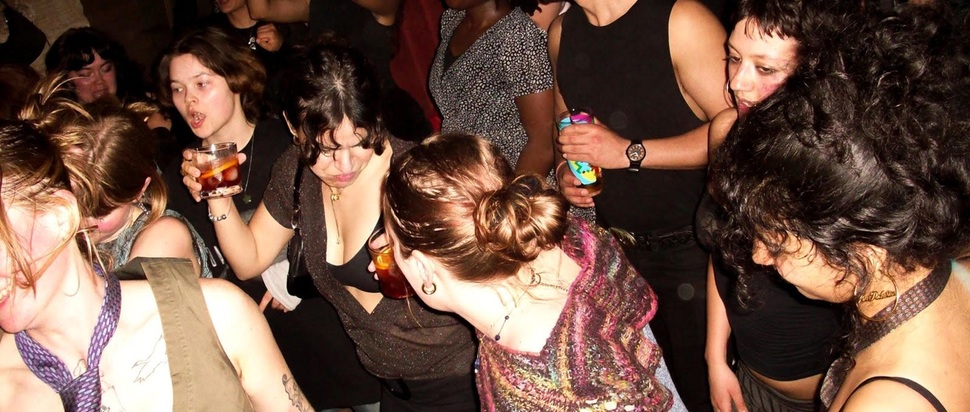
As a 15-year-old girl growing up in India, I remember an afternoon when some well-meaning, overworked teacher gave me control over the music that was being played on the speakers inside the assembly hall. Ten seconds later, Kurt Cobain was singing about his libido, and I was whipping my limbs around and thrashing my way through this improvised dancefloor which had, until that point, heard only the dulcet tones of Hindustani music and hymns. Was I dancing? I hesitate to call it that. It was more like a feral fog had descended over me, and the awkward, hyper-scrutinised teenage-ness of my body felt suddenly and inescapably mine. I wanted to do something with all this self-possession before they took it from me again.
At 21, I moved to Leith. Whatever society had tried to take from me had clung on inside the hidden folds of my soul, smuggled out of the country by the virtue of excellent grades and overplayed ambition. I go back to that assembly hall in my dreams a lot. For all our ‘freedom’ in the ‘West’, can you dance like that here, without a stimulant in sight, with wild abandon, fuelled entirely by desire and fear?
Polite Indian society frowned at me for my ‘spoiled’ behaviour, yes. But western society does something worse – it studies me.
At 25, my ragtag wonderful army of found family threw me a birthday party in the basement of the student co-op. There were two cakes, both homemade. Deck fever had regrettably not caught on to us yet, but the beginnings of it were there – in the music being queued, the rhythms being matched, the cultures being blended into this Frankenstein cohesion. What a day to be alive, I remember thinking. I didn’t know everyone in the room. I loved that about this party. Strangers wished me a happy birthday, and I faced them in a circle that had formed organically. All of us facing each other, all of us suddenly slammed back into bodies that we are alienated from in this post-modern nightmare – surveilled and shrunk. There is a truth, I thought, and it is my body.
I looked at Nara and Hajar (who would later become DJ Shahrazadi, our beloved residents) and said, let’s do this all the time. And that was how it was born – the skeletal architecture of Brown Gals Dance Club. Brown. Gals. Dance. Club. In the end, we have been true to none of these four words and therein lies the magic of it.
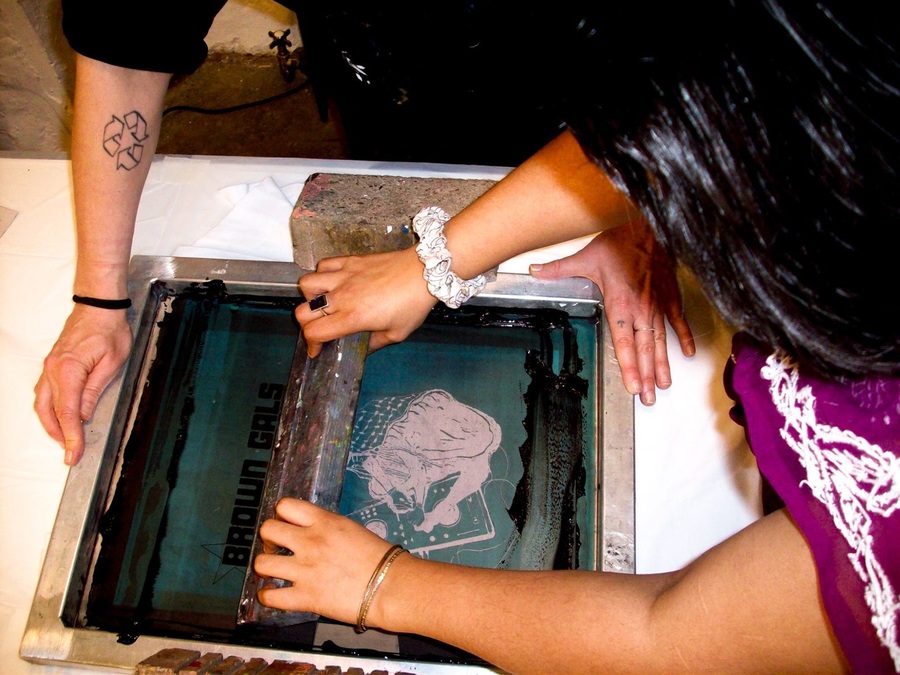
Credit: Azia Bolger.
Putting together four events has been work, but what wonderful work! Like the work of living, I would never think to outsource it. Azia and I had planned the first one, and that is how we met Lana, who completed our trio and fuelled us. Lana, who recalls dancing to Nancy Ajram in her living room growing up. Lana, who grew up with the Lebanese spirit of dancing the night away. Azia, being the cross-disciplinary genius that she is, is an exceptionally gifted photographer. We had a photoshoot, dressed up in outfits and jewellery that made us feel like ourselves, a visual representation of our odd, very individual identities, that are nonetheless inseparable from our cultures.
I am the daughter of a land that does not know what to do with me. There is tragedy in this, as there is opportunity.
Bogomir Doringer’s work on dance as a potentially political thing explains it better than I can. Doringer explains “dances of collective crises” simultaneously as escape, politics, reclamation and response. We cannot dance political tragedy away, and I am not naïve enough to believe that dancing is itself an inherently political act. Yet, I also know that it is a form to release what burdens us. It becomes an urgent and frenzied thing. By the end of it, you feel like you have almost touched a terrifying divinity. That first club night, I learnt in a room full of people who are all carrying the tragedies of our lands – ravaged by colonialism, violence, neo-imperialism and capitalism. I learnt that your culture does not need to be carried like a secret, or an apology, or a shield. In this room, with this music, you can carry it like grace. You can balance it on the rhythmic slither of a partner’s waist. You can hear it in the tinkering laugh of someone laughing at a joke which is in a language you do not understand. I learnt that joy need not always be understood to be shared.
We aren’t champions or representatives of our cultures, and we haven’t ever claimed to be. We are three brown girls, who have cooked a dream, sweetened it with friendship and we would like to invite you to a feast.
Find out details of the next party @browngalsdanceclub