Sophie Robinson on her debut novel Prairie Oyster
Acclaimed poet Sophie Robinson chats to us about her debut novel Prairie Oyster, and why poetry wasn't enough to tell this particular story
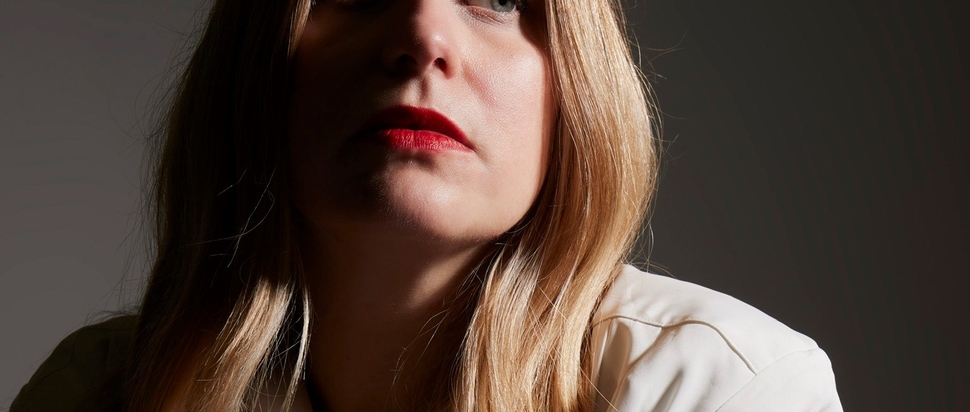
Acclaimed poet Sophie Robinson was coming up against the limits of her medium. She wanted to write about her sobriety journey – from years of drug and alcohol addiction to her first few moments of adult life with “most of her brain cells” awake. But poetry wasn’t going to cut it for this project, and neither was experimental non-fiction. “Anyone who's been an addict knows that getting sober… there is a weird kind of trauma; a compulsion to have a narrative that you repeat,” she explains. Developing a narrative was something fiction could support, and her novel places its protagonist in this at-times hopelessly cyclical narrative of addiction and sobriety, inspired by 1940s film actress Veronica Lake.
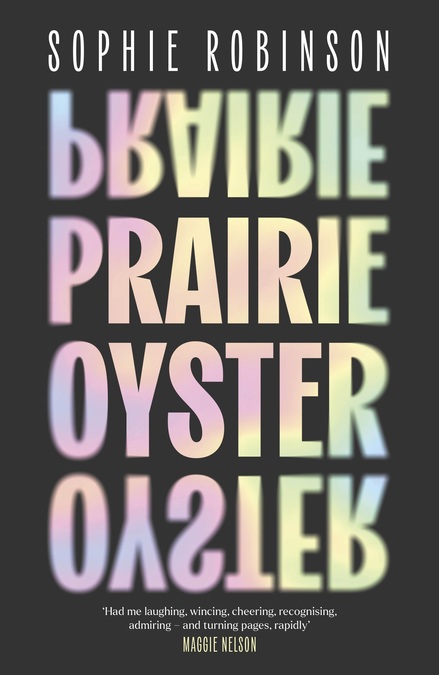
Prairie Oyster follows a young, successful filmmaker, Pearl, as she navigates sobriety while pursuing a passion project about Lake and an entanglement with a cult filmmaker named Mitch, 30 years her senior. The name Prairie Oyster refers to a 19th-century cocktail used as a hangover cure, containing a raw egg yolk that, unbroken, is said to go down like an oyster.
While developing Pearl’s narrative from her own experiences, Robinson was also determined to rewrite the cultural narrative surrounding Lake. Lake wasn’t the “lovable, white straight guy” making ground-breaking art from her addiction, she says. Instead, she stopped acting, lived the rest of her life drinking and faded into obscurity – to the extent that her ashes were discovered in an antique store in 2004. This disappearing plagues Pearl, trying to uphold her career as a revered filmmaker while slipping into a series of relapses.
Paradoxically, what brings this underland to life, for Pearl and for Robinson, is cinema.
“The experience of addiction is like being outside of time – blackouts, losing memory. The experience of withdrawal as well is very visceral, so I felt a real affinity to images and cinema,” Robinson says. “I also had an interest in cinema as fakeness. Veronica Lake was a famous film star, but she only made films for a few years… [Pearl] is horrified by Veronica's story because she's like, that is meant to be the whole point of making a film. It’s making this indelible stamp on the world – I'm visible, I'm real. And then this person just disappears.”
Through her exploration of cinema in the book – particularly in Pearl’s affinity for the form, and Lake’s recounting of her career via interludes of interviews – Robinson plays with surface and depth, leveraging a sense of mirage to point to deep disillusionment in a brutal, unlivable world.
“It’s all intertwined,” she says. “Cinema, alcoholism, a romantic obsession with childhood – it's all about: ‘I feel invisible, I don't feel loved, I don't feel important.'”
While Pearl’s search for herself tends to revolt against her, there is some comfort to be found in Prairie Oyster’s steady cast of characters which, by Robinson’s intention, occupy different intersections of normative relating. There is Bunny, Pearl’s best friend and occasional lover, Björn, an Icelandic film producer with a breezy fatherliness and, of course, Mitch, simultaneously the object of Pearl’s affection and her steely, Boomer/Gen X mentor. No character in the book fits into a neat role, and Robinson likes it that way.
“I’m queer because my life is not defined by traditional heteronormative ideas of the nuclear family,” she says. “I wanted to represent relationships that defy easy explanation or don’t fit into conventional forms of kinship.”
Robinson says she feels far from a sapphic literary tradition that leans on these conventional ideals. Instead, she is interested in creative elders who found their place in queer, radical art-making. Finding her lineage in the likes of Barbara Hammer, Kathy Acker, Marguerite Duras and Eileen Myles, Robinson gave her Pearl a Mitch – the embodiment of an unbearably cool elder who has already done the visionary work that feels impossible as a 30-something year old in the year of 2026.
Robinson is 40 and got sober in her early 30s. In Prairie Oyster, Pearl is in her 30s and trying to get sober. Veronica Lake stopped making films on the cusp of her 30s, and to the best of public knowledge (Robinson has trawled every niche internet forum on Lake to exist) never had a period of sobriety in her adult life. Through the reverence of Robinson and her lead character, however, Lake is offered dignity and an interiority rarely afforded to alcoholics of that time who weren’t straight men – an aspect of that being her choice to drink, and keep drinking.
“I hope that by staying with Pearl and demonstrating someone who is, from the outside, living an exciting creative life, [it shows] how much of a struggle it can be to stay alive every day… I wanted to leave the book with this sense of beauty and newness and hope, but also, with knowing the terrifying indifference of the world.”
Prairie Oyster was undergoing edits until the very last minute, she adds. This faithful representation of addiction and sobriety, weaving fiction and personal experience, took seven years of thought and discernment to produce. There was one thing Robinson says she was certain about from the very beginning, though: Lake would have the last word.
Prairie Oyster is out with Fleet on 26 Feb