Shahed Ezaydi on The Othered Woman, white feminism and Islamophobia
We chat with author and journalist Shahed Ezaydi on her debut book The Othered Woman and her years of research into the harms of white feminism
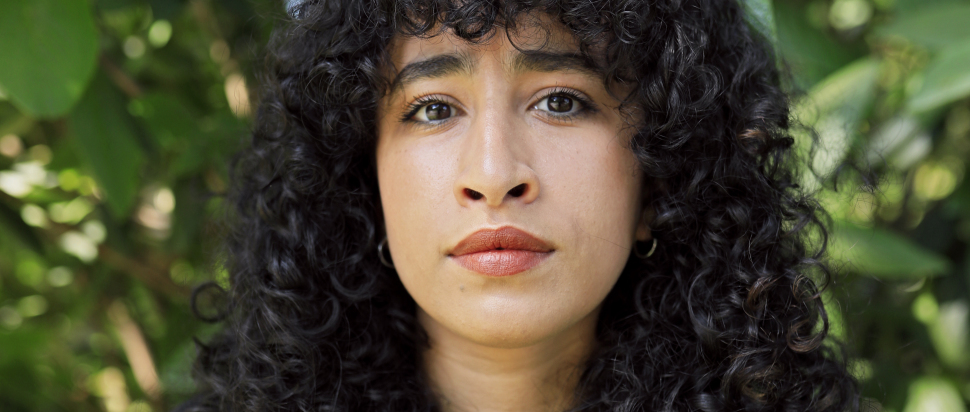
It is no secret that academia is inaccessible. Finding rigorous, in-depth research often means paying extortionate fees for online PDFs, only to be greeted by impenetrable sentences that grow more opaque with each rereading. Shahed Ezaydi's The Othered Woman: How White Feminism Harms Muslim Women offers a welcome antidote.
“I wanted to write and research something that is for pretty much anybody to pick up and read new or existing arguments,” Ezaydi explains to me over Zoom. Skillfully disentangling liberal white feminism’s history of exploiting Muslim women to advance its own agendas and world orders, Ezaydi presents her arguments with clarity, foregoing the old jargon. “You don't have to be university educated to pick this up, you don't have to have access to journals or academia.”
Ezaydi’s work could not have arrived at a more urgent moment. At the time of our conversation, it has been just under two weeks since Donald Trump and Benjamin Netanyahu launched an illegal war on Iran, justified in part by the familiar claim of liberating people from an authoritarian regime. But this line of reasoning is hardly new in US foreign policy. Ezaydi deftly dismantles these prevailing hypocritical arguments that white feminists have historically used to support wars in Afghanistan and Iraq: interventions justified as efforts to liberate women from oppressive regimes, though the reality has rarely borne this out.
“I think white feminism is having to look internally at what has been used to justify these things in the past,” Ezaydi says. “When I first started writing this book, it was still a controversial and loaded term. People were defensive because it contained the word ‘white’. But now, especially, people are starting to think more critically about it. I have hope that people are beginning to link these things.”
Throughout The Othered Woman, Ezaydi holds up white feminist arguments, only to deftly show how hollow they are. One of her chapters tackles the stereotype that Muslim men are inherently violent, making Muslim women victims who must be rescued by their white counterparts. Yet, as Ezaydi points out, the sexual violence of white men is rarely understood within a broader framework of social conditions; instead, it is always portrayed as inexplicable, spontaneous acts of cruelty. Ezaydi is unwilling to accept this double standard.
“I think Muslim men couch their violence through Islamic language or cultural traditions,” she explains, “and so white feminists are able to say, ‘Oh, that’s different to the misogyny in our communities, and it’s so much more extreme.’ Whereas actually, I would argue it is the same violence, just in a different form.”
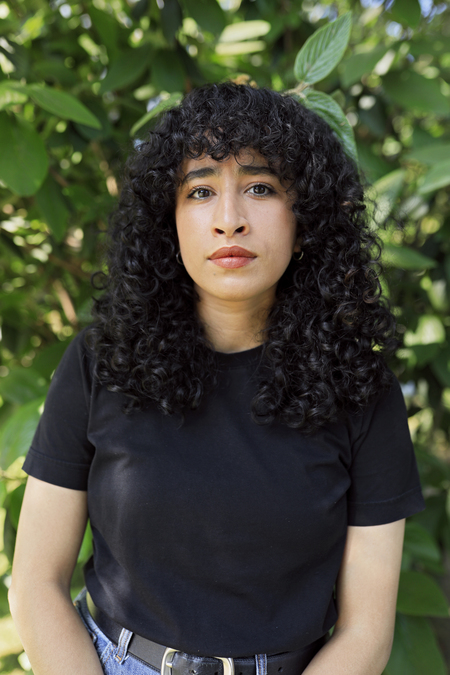
Credit: Ella Kemp
It would be impossible to write about the tensions between Muslim women’s experiences and white feminism without addressing the hijab, whose cultural symbolism in the West – an emblem of cultural degradation that is fundamentally at odds with Western public life – threads throughout Ezaydi’s book. “That does start to trickle down into public consciousness,” she argues. “People do, whether they like it or not, begin to absorb these stereotypes, especially those who don’t know any Muslims in their own lives, and whose only exposure is through the negative stereotypes depicted through TV, newspapers, film, or fiction.”
Ezaydi carefully traces how this persistent stereotyping has profoundly shaped the lives of Muslim women living in the West, particularly in Britain and France. Muslim women who wear the hijab are rarely given the space or opportunity to articulate their own reasons for doing so. Instead, meaning, symbolism and explanation are mapped onto their bodies by unsympathetic, often right-wing voices.
“If they actually met a hijabi woman, they’d see that every single one is different,” Ezaydi says. “She’s complex. She has her own thoughts and opinions. She can be conservative, she can be liberal, she can hold all sorts of views. But we’re always seen as a homogeneous blob.”
Yet despite the persistence of white feminism, Ezaydi has not lost hope. In fact, the book closes with interviews with Muslim feminist trailblazers including the poet, playwright and educator Suhaiymah Manzoor-Khan, and Nafisa Bakkar, CEO of the Muslim women-led media platform Amaliah. By ending with their insights and reflections, Ezaydi invites the reader to move beyond stagnating anger toward a more productive sense of optimism.
“Anger is a really useful emotion, especially when it comes to activism. It can spur people to take action. But there is also so much power in positive emotion, and hope is such a powerful tool for organising, for campaigning, for activism,” Ezaydi explains. “It’s up to us to carry that hope, because the far right don’t have that. They rely on negative emotions. We should have anger, but it should be expressed differently, because I do believe the world can change. Maybe that’s to do with my faith and my spirituality.”
Despite the sobering statistics of our current reality, it is evident that Ezaydi’s driving motivation is not despair but understanding. She invites us to confront where we are in order to move forward with clarity and purpose. “I’m hopeful that in 50 years’ time, many more doors will have opened for many more women,” she reflects, pausing for a moment, “not just for white feminists.”
The Othered Woman is out now with Pluto Press