Samar Yazbek on Your Presence Is a Danger to Your Life: Voices From Gaza
We speak to Syrian journalist Samar Yazbek about her latest book, a collection of testimonials from Gazans living under genocide
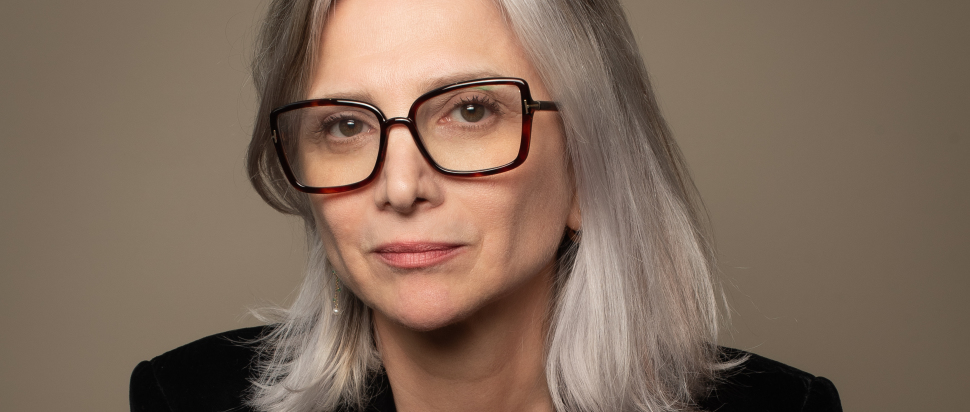
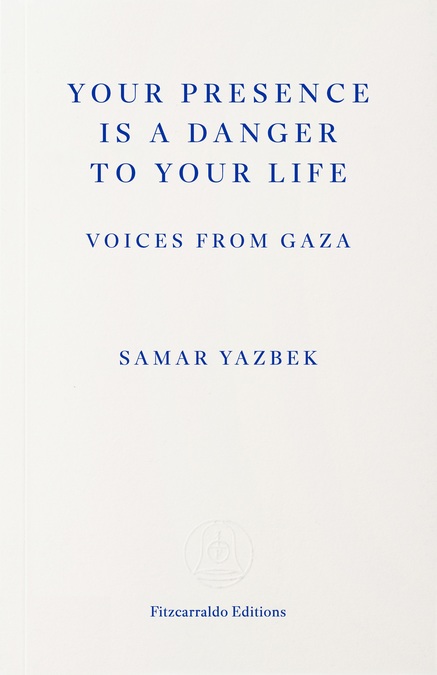
In her latest work, Your Presence Is a Danger to Your Life: Voices From Gaza, Syrian journalist Samar Yazbek collects the testimonies of 26 Gazans who describe their accounts of genocide. The title comes directly from the evacuation leaflets dropped over Gaza, by the Israeli army, telling everyone to leave or die.
Yazbek has repeatedly collected testimonies of war and revolution, but not like this. Today, she says, “The killers are robots and the victims are human beings.” The infiltration of new technologies into Israel’s war machine has severely shifted what was already a dire situation: “an Israeli can simply press a button while sitting in his elegant office to kill hundreds of Palestinians or destroy an entire tower in Gaza,” she explains. Your Presence Is a Danger to Your Life is an attempt to counter this dehumanisation, foregrounding the human cost of this faceless massacre.
Yazbek describes this book as her “first, most difficult, interaction with the massacre,” despite her long-time support of the Palestinian cause. She met the survivors as they received medical treatment in Doha. Limbless but indeed not hopeless, their resilience, their “indomitable will” to live and resist loss, their sumud, struck Samar with awe. “They stood up to death, and despite the horrors, they still have hope for the continuation of their lives, and many of them want to return to Gaza,” she says. Even so, these individuals have borne the brunt of evil at its most despicable, and continue to live in relocation and physical, mental, and medical reconstruction. But they should not have to.
What is survival when a genocidal project continues to operate? How do we confront and address the facilitators of hell on earth? How do we begin to approach those whose rage and grief is inconceivable and beyond measure, even when we have those emotions so deeply within us?
As a child of war and exile, Yazbek struggles with the word ‘survivor.’ When forced into exile because your home has become a deadly habitat of unlivable conditions, is it survival? “Their homes were destroyed,” Yazbek says. “Their families were killed, and parts of their bodies disappeared…Those who survive find their lives transformed, becoming another reflection of the death of those around them. The war lives within them, and they carry it with them until their last breath, until death. Some have lost the right to walk, some the right to see, some the right to speak.” But Yazbek strives to render a space wherein these individuals do have “the right to speak, to see, and to talk about the suffering of others,” and the testimonies do so in aching and poignant ways.
In two particular testimonies, the individuals repeat that same line: “We [are] living between life and death.” Each experience is distinctly indescribable and unique, yet horribly shared by Gazans on a collective level. Whether evacuated or trapped within the confines of mass concentration camps, Gazans feel no more alive than those martyred. If to “survive” is to live in this limbo of trauma and grief that penetrates the testimonies, then maybe “those who die in war are the true survivors,” Samar says.
Yazbek’s own first-hand experience of war and oppression adds a complex combination of grief and difficult nostalgia to the book, which made it challenging to approach. The most memorable interaction in the process of making this book, she explains, was “Abdullah's testimony, who was 13 years old when I met him.” After they met, she found she “couldn't sleep all night.” Left with facial disfiguration, and the traumatic memory of witnessing his mother burn before his eyes, he nevertheless “survived,” or at least lived to tell the story and make such an impression that “he's the only one I allowed myself to take a picture with, and I kept it.”
It is common, she adds, that children in Gaza often speak, behave, and feel like adults. Yazbek isn’t interested in romanticising them as children wise beyond their years; instead, she stresses, they are traumatised witnesses of an impossible reality. “Abdullah said something terrible to me,” Yazbek says. "[He said]: ‘Do you think there are children in Gaza? There are no children in Gaza! We are born grown-ups!’” It is an idea Yazbek implicitly understands.
Yazbek hopes that this book of testimonials “will be a cry against the brutal barbarity that the Palestinians are enduring,” pulling together people across age, gender, and geography to present a complete as possible picture of the ongoing genocide. Together, the testimonies speak to a constant flux between life and death. The ongoing wounding and scarring of those who have endured death twice over is inexplicable; their voices and traumas bleed and burn through its pages, and yet, they constantly emphasise that they cannot even narrate the entire story. Even beyond the unbearable smells of death, the phosphorous killings, and lost lineages, there is that dark and unspeakable rest of the story.
Your Presence Is a Danger to Your Life: Voices From Gaza is out with Fitzcarraldo Editions on 21 May