Peter Mackay on Scotland's multilingual legacy
Scotland's Makar Peter Mackay explores the legacy of Scotland as a multilingual country ahead of his event at Push the Boat Out
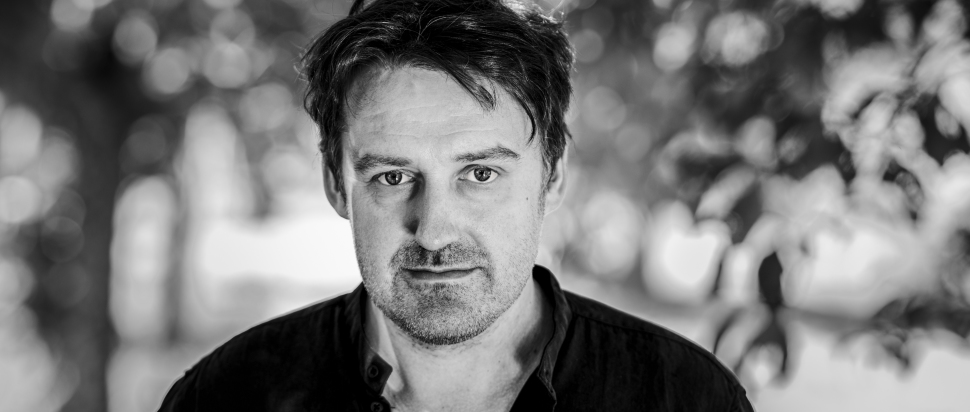
Scotland has always been a polyglot. As far back as our records go, people have shifted between P- and Q- Celtic languages, Latin, French, Scots, different types of English and many languages from all parts of the world. And this is how I have always found it. I grew up on the Isle of Lewis surrounded by Gaelic, English, Old Norse remnants, as well as Arabic, Mandarin, Bengali (though these were often the language of homes rather than the street). Living in Edinburgh now I hear, in the cafes, shops and bars around me Greek, Spanish, Urdu, Bengali, Irish, tongues I can guess at, but not know (like many writers, I’m nosy, always listening out for a good turn of phrase, a good, unexpected story).
The multi-lingual, multi-cultural fabric of this nation is something we need to actively celebrate and explore. Scotland is never a place that has turned its back to the world (we’re too fond of roaming if nothing else). The Scotland around us today is made up of conversations, jokes, arguments, poems, communications and miscommunications between different languages, and it is all the richer for that.
The multilingual nature of the country is certainly not something to be afraid of – or try to limit or suppress. I think that it is easy if you only speak one language, and that language is as globally dominant as English, to develop the habit of assuming that you have a right for everything to be easily available to you, that you should understand everything – and that there is something unsettling if you can’t understand everything that is going on around you. What are they talking about? Is it me? (I’m not saying that speaking only one, dominant language will make you paranoid or solipsistic; but it might help you along that way).
The ease that comes from having everything delivered to you in your language is certainly not something that speakers of minoritised languages, even when they now have official status – like Gaelic, Scots and British Sign Language – can ever take for granted, except at possible great existential cost.
And, in any case, I think it is healthy to live in a world where you don’t understand everything, where people speak in languages around you that you don’t (currently at least) understand. Where you trust that they fundamentally live their lives in good faith, and so can have medical information, government communications, election material in their languages without anyone seeing that, in some amorphous way, as a threat.
My own comfort with not-knowing might be in part because of my own personal good fortune. As a poet who writes primarily in Scottish Gaelic, I have been lucky enough to have excellent translators, into Czech, French, Irish, Macedonian, Russian, Slovak, Welsh; this is not because my poetry is so great that it deserves to be translated – but because there is an understandable interest in lesser-used languages, and how they might be different from what is going on in English-language literature.
And in most of these cases I just have to say: on you go, have fun, rewrite them as much as you want, without having a clue what the effects are in the other languages. In one poem about a snowstorm, I use the Gaelic line 'clòimhdeag, leòmag, dideag', which in English would just be 'snowflake, snowflake, snowflake', losing all of the Gaelic’s linguistic distinction – and I hope the translators feel free to go wherever they want with this, untethered by the English bridge (or indeed the Gaelic original).
I’ve always found translation to be a way of taking you out of yourself, of connecting with other people, their imaginations, their ways of being. And for writers, I think that the more opportunities we have to engage closely and deeply with someone else’s work, as readers, or engage with someone else’s reading of our own work, the better. This is how one grows as a reader, a writer, a person.
But it is also how we all grow as a culture, with more fibrous tissue between us, more play and fun, more metaphors that have been juggled and tasted (I’m convinced we all ‘translate’ ourselves every day, writers or not, when we shift between registers, codes, levels of language, ecolect, idiolect).
So, I’m delighted that over the last couple of years I’ve been able to run a series of events called Our Many-Voiced Country, where Scottish poets working in a wide range of languages – Gaelic, Scots, French, Laziale, Macedonian, Spanish, Arabic, Polish, Jamaican Creole, Catalan, Englishes-haunted-by-other-languages – have responded to each other’s work with probing, witty, powerful poems.
And I'm especially delighted that I’ll have the chance to hear six fantastic poets (Deborah Moffat, Tim Tim Cheng, Vahid Davar, Mae Diansangu, Paul Malgrati and Jordí Larios) do the same at this year’s Push the Boat Out, as part of the festival’s wider vibrant celebration of languages, words, poems, music and sounds. I’ve no idea what words, what ideas I’ll hear, and I’m extremely grateful for that.
Our Many-Voiced Country takes place Sun 15 Nov as part of Push the Boat Out Festival.
Push the Boat Out takes place at the Pleasance and in satellite venues across Edinburgh, 12-15 Nov