Daisy Dixon on Depraved: The Story of Dangerous Art
We chat with author and art philosopher Daisy Dixon about her new book Depraved, and what we should be doing about harmful art
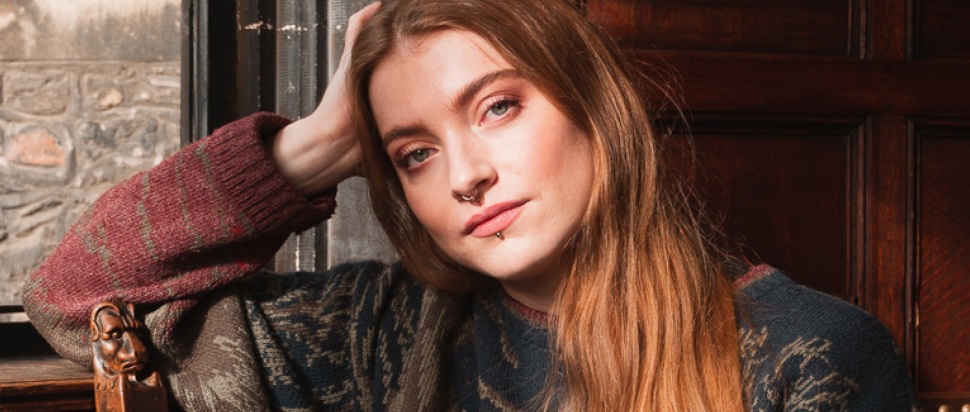
What should we do with depraved art? Take Titian’s The Rape of Europa (1560-62), for example, which depicts Zeus, disguised as a bull, abducting a young princess. Europa’s mouth is seductively ajar, and her legs are parted as she is swept away, clutching the horn of her rapist. The implicit message behind Europa’s conflicted arousal is that consent is unnecessary – that her ‘no’ really means ‘yes.’ So, should we slash it or let it grace our gallery walls? According to philosopher and author Daisy Dixon, the painting is a form of hate speech against women, as described in her new book, Depraved: The Story of Dangerous Art: “its true depravity […] emerges from its position in a wider web of cultural domination and white cis-male supremacy.” Yet Dixon is not in the business of cancelling Titian, who remains one of her favourite artists.
“Big questions tend to attract black-and-white answers [because that] makes them more attractive or interesting,” Dixon tells me. “The reality of these things is normally far more complicated.” In her book, Dixon conjures a Hydra to help us wrestle with the many-headed nature of immoral art and the urgent political question of what we should do with it. The Hydra’s five heads show that art can be depraved in five, intersecting different ways: by explicitly depicting immoral acts; by influencing people towards harmful behaviour; by expressing dangerous ideas; by reflecting the character of immoral artists; and by being produced through the exploitation of humans, animals or the natural world. These heads bump together – immoral art cannot be slain neatly.
In the near-distant past of the pandemic, the challenge of immoral art rose ferociously to public consciousness; suddenly, Dixon found that her doctoral research “had a foothold outside the ivory tower” of academia. She cites the #MeToo movement, the 2019 allegations of sexual abuse against Michael Jackson, and the toppling of slave trader statues during the 2020 Black Lives Matter protests as motivators for writing Depraved.
Dixon sets her Hydra on an eclectic range of art, from Hitler’s watercolours to Marina Abramović’s performances. Notably, she focuses on Edward Colston’s statue in Bristol, which was famously pulled down, defaced and rolled into the river by BLM protestors. Pushing against Keir Starmer’s lacklustre tweet in response (he said that it should have been removed from our streets long ago, but not in this way), Dixon argues that protestors rightfully, and colourfully, engaged with Colston’s injustices through the attack on the statue. She suggests that if we follow Starmer’s wishes and quietly remove the public art commemorating problematic figures, we sweep their atrocities under the carpet. Rather, it is through community-driven spectacle that we can confront the atrocities of our past and present.
The original plaque that accompanied Colston’s statue erased his active participation in slavery – a kind of censorship that extends to gallery wall labels. In recent years, there has been a considerable rise in public galleries and museums updating their interpretation frameworks to decentre colonial, patriarchal and ableist language and narratives. Tate, for example, actively invites visitors to report interpretations that overlook or misrepresent perspectives, suggesting that art history is not static or singular. In Depraved, Dixon claims that “curators have a social and moral responsibility to provide counternarratives and tell honest stories about the art they display.” Delving further into these wall texts, she cites Gauguin and Picasso as “classic” examples of this kind of censorship, in which the gallery texts obfuscate the artists’ abuse of underage girls, some of whom were painted subjects. But Dixon is pleased when galleries acknowledge that these artists pursued these underage ‘girls’ and not ‘women.’ “The subtle language changes are really important,” Dixon explains, “otherwise not only is it inaccurate, there is something sinister about obscuring the reality behind these works.”
We end our conversation with a discussion about the art that is yet to come. Dixon’s Hydra is equipped at interpreting the immoral art that already exists in the world, but should there be parameters in place for making art? According to Dixon, “blanket censorship” is never the answer. Rather, she thinks that “there are certain [ethical] ideals that artists could aim for,” explaining that artists who kill animals or harm the planet should think seriously about whether there are alternative ways to express their ideas.
She extends these ethical considerations to AI, while acknowledging that this edition of Depraved entirely steers clear of AI. In part, this is because debates around AI hadn’t exploded during the writing of Depraved. She might set her Hydra on AI in a future edition, particularly as it raises concerns around the exploitation of the environment and of intellectual property. There is a tendency to forget that AI is a human invention, and that humans are responsible for its depraved outputs, produced at great speed and volume. But for Dixon, the “pure” use of AI to create multimedia content cannot constitute art. For her, she explains, art is “a distinctively human thing, or indeed sort of animal thing – a living, sentient thing to do.” Why replace something so existentially affirming and philosophically complex with the press of a button?
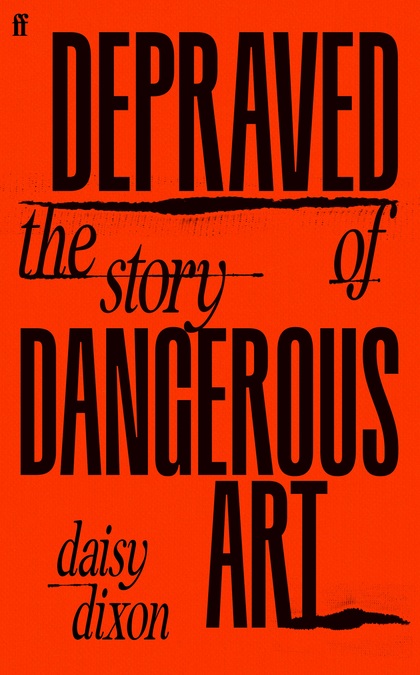
Depraved: The Story of Dangerous Art is out with Faber on 18 Jun
Daisy Dixon will be in conversation with Rachel Ashenden at the Portobello Bookshop on 25 Jun