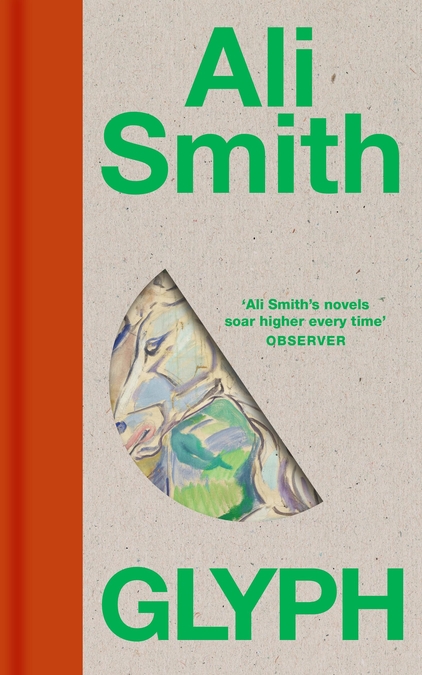
Glyph by Ali Smith
In her latest novel, Ali Smith looks to the past to explore how and why we never seem to learn from historic mistakes
Few writers are as playful as Ali Smith, who seems to delight in the process of putting words onto the page in as artful a way as possible. This is clear before you even begin her latest novel, the title Glyph immediately recalling her previous Gliff. What is the link, homophone aside? It’s referred to by one of the characters who has just read it, and this is just the sort of in-joke Ali Smith revels in. But where Gliff was set in a dystopian future, Glyph looks to the past. It’s a ghost story which is at its heart a treatise on the horrors of war, lamenting that we never seem to learn lessons from what has gone before. Two young sisters, Patricia (known as ‘Patch’) and Petra are told a terrible tale from the past and, as a result, they invoke a figure from that past who they come to refer to as ‘Glyph’. But is this a case of vivid imaginations trying to make sense of something they don’t understand, or is there more?
This is a novel about the importance of stories and how they can affect people for better or worse. Glyph’s is one of hardship and heroism, leading to tragedy. Petra and Patch’s are eternally entwined, connected beyond the usual familial bonds. Glyph proffers that the stories we tell, and how we tell them, matter greatly.