Still Glasgow @ GoMA, Glasgow
A new photography exhibition does much to capture the post-industrial city's evolving identity, but its nostalgic slant is overbearing
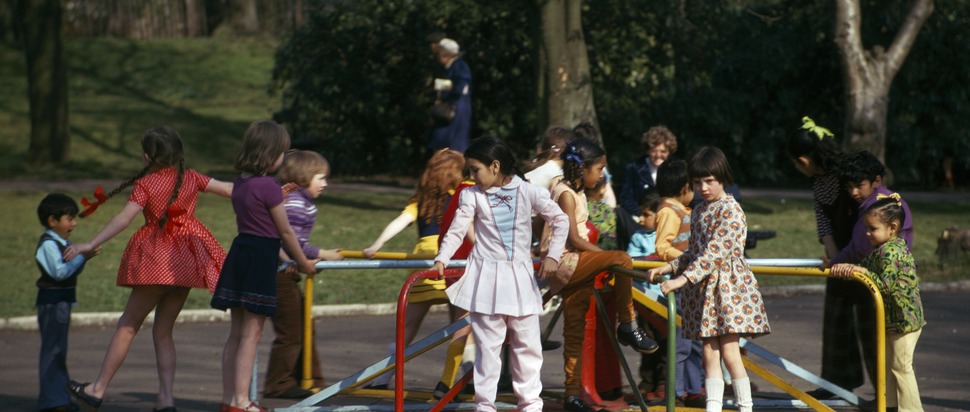
Glasgow is a city which enjoys its own history – and many of us Glaswegians won’t dispute that. We’re well-accustomed to black-and-white photographs of tenements, shipyards and street games. Still Glasgow – a new photography exhibition at GoMA – isn’t too much of a stray from the familiar. Celebrating the city’s 850th birthday, and GoMA’s 30th anniversary, the exhibition promises an exploration beyond nostalgia, speaking to Glasgow’s future, as much as its past and present.
A healthy handful of photographic legends claim the walls: David Eustace, Oscar Marzaroli, Jane Evelyn Atwood, Linda McCartney. However, Still Glasgow’s own greatness lies in the works which are that bit closer to home.
To welcome us, Iseult Timmermans’ 10 Red Road Court sits on the first facing wall. Interiors and exteriors, variety and uniformity: the 30 floors of the now-demolished Red Road Court flats are documented in a collage of over 300 photos. To the right, an image offers a view from the council flats; below, another image shows two young girls, in their living room, with sparkling Happy Birthday decorations behind them. Made in collaboration with the residents ahead of demolition, the work’s vastness speaks to the many lives lived in just one building.
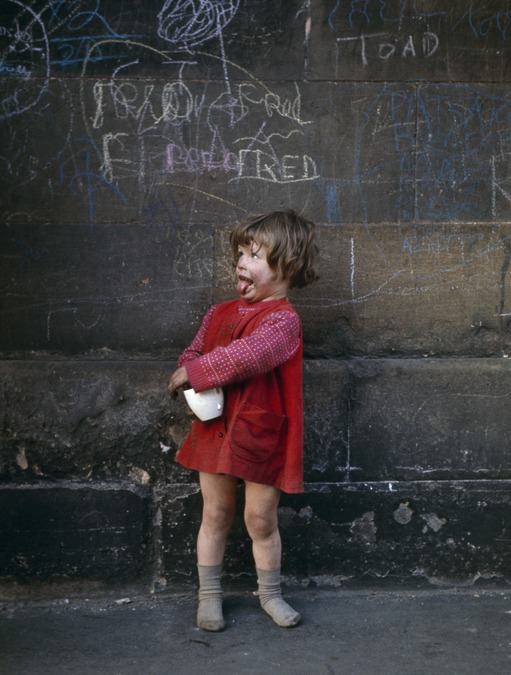
Eric Watt, Girl at Chalk-marked Wall @ Still Glasgow, GoMA. Credit: Glasgow Life Museums' Collection
Likewise, the twelve works of Glendale Women’s Cafe see women from Pollokshields both in front of and behind the camera. Working with photographer Robin Mitchell, the images share parallels with the works of Eric Watt, who also features heavily throughout the exhibition. Shoes off, legs crossed on a bench; fruit in the street and fruit in stalls; shopfronts and shop shelves: intimate and singular, the images reject pretension in favour of a truly autonomous lens.
In the centre room, Matthew Arthur Williams’ portrait of Charlie Prodger, the 2018 Turner Prize winner, brings a contemporary lens to a largely past-tense room. Although a striking image – both a stance and a camera held softly – its isolation on a slim wall positions it as something of an after-thought within the wider exhibition.
Taking centre frame in the final room, however, is Roderick Buchanan’s film Gobstopper, depicting a series of children – full cheeked and eyebrows raised – attempting the much-loved Glaswegian childhood game of holding your breath while driving through the Clyde Tunnel. With Gobstopper, a vitality arrives. Glasgow is living, breathing, gasping and it is a delight. On the opposite wall, photographic panels from video artists Elsa Stansfield and Madelon Hooykaas’ installation What’s It to You? similarly capture a movement. Questions sit alongside photographs depicting people busying themselves in the Barras and on Sauchiehall Street, the clatter and chatter of the city almost audible. With the original video work now lost, the panels offer a thoughtful engagement with form and its vulnerabilities over time.
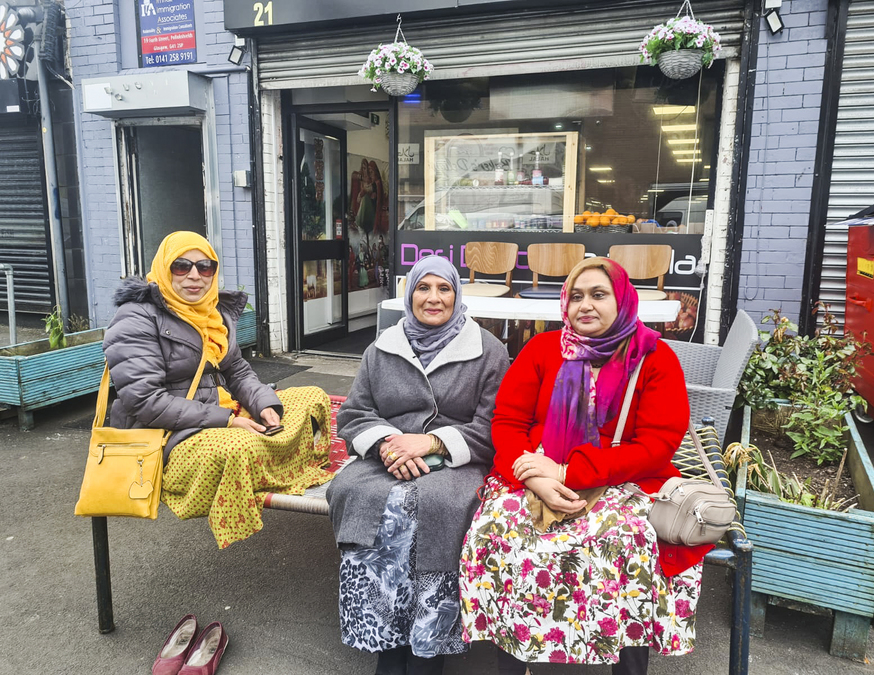
Zubaidah Azad, Friends Getting Together @ Still Glasgow, GoMA. Image courtesy of the artist.
Undoubtedly, the present tense seeps between the frames of Still Glasgow. Most notably, in Alasdair Gray’s collage-like portrait of an admin worker at the People’s Palace, titled Frances Gordon, Glasgow Teenager. It’s difficult to greet the work without considering the social history museum’s indefinite closure. And, with an inexplicably long run time of November 2025 to June 2027, it’s impossible to separate Still Glasgow from the wider context of the city’s dwindling art scene.
A little nostalgia is no problem – and its warmth is oftentimes welcome. Such is particularly true amid these trying times, with both the city’s present and future appearing uncertain. Still Glasgow holds onto what it knows; sometimes, a little too hard. In its loving clasp, Glasgow carries on.
Still Glasgow, GoMA, Glasgow, until 13 Jun 2027