GSA Degree Show 2026: The Review
From techno-nihilism to tenement living, students at the Glasgow School of Art present work that shifts between personal expression and political commentary
At the Glasgow School of Art 2026 Degree Show, which runs until 7 June, students explore themes ranging from geopolitics to communal experience to personal diary, altogether exhibiting an impressive display of technical skill paired with creative ambition.
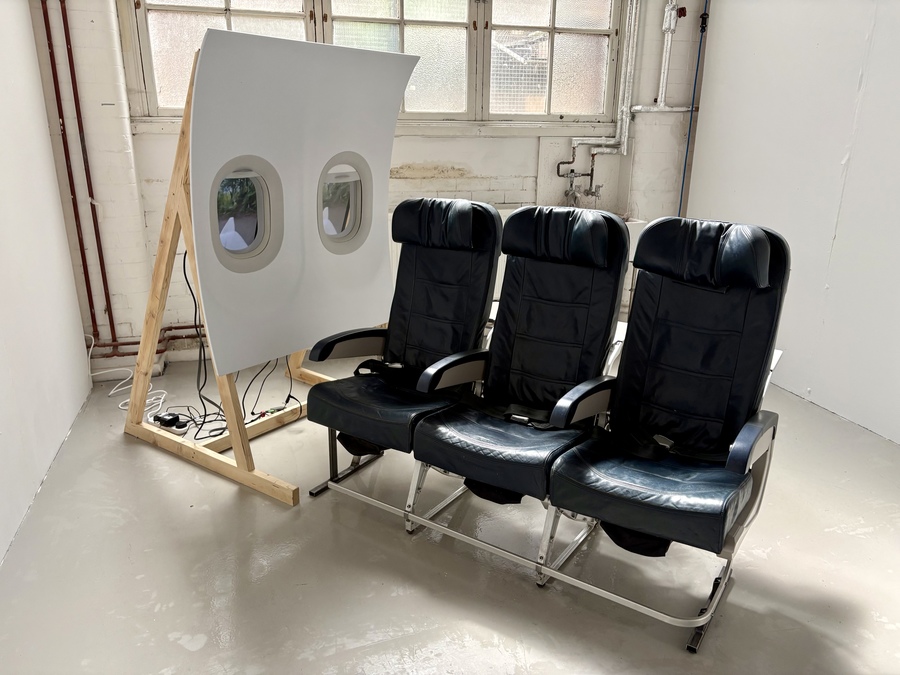
In the school of Sculpture & Environmental Art, Scarlett Darnell uses humour to execute her sculpture and film display. She uses disposed aeroplane seats and mock-windows to frame the film, mimicking an absurdist flying experience. The installation simulates takeoff, not across skies but through familiar scenes, including Kelvingrove Park and St. Enoch Subway station. Visitors tend to smile and linger as they watch with curiosity the very city they are situated within. By simply consuming the piece, I was inserted into a wry parody; I sat engulfed by the modern-day irony of appearing well-travelled without turning from a screen.
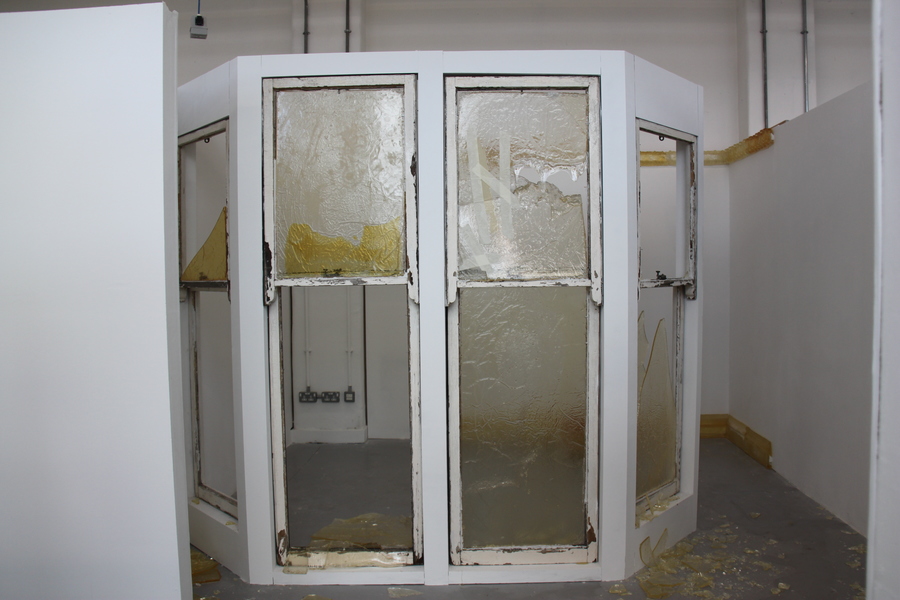
Remaining in the Glasgow landscape, sculpture artist Genevieve Dawson inspects colonial histories through the Glasgwegian home. Glass made from sugar is manipulated to appear shattered and drooped over the iconic motif of tenement windows. This clever installation, titled Home Sweet Home, uses sugar glass to reflect on how a violent imperial past remains embedded within our everyday lives and domestic spaces. The familiar is morphed and uncomfortably disrupted through her art.
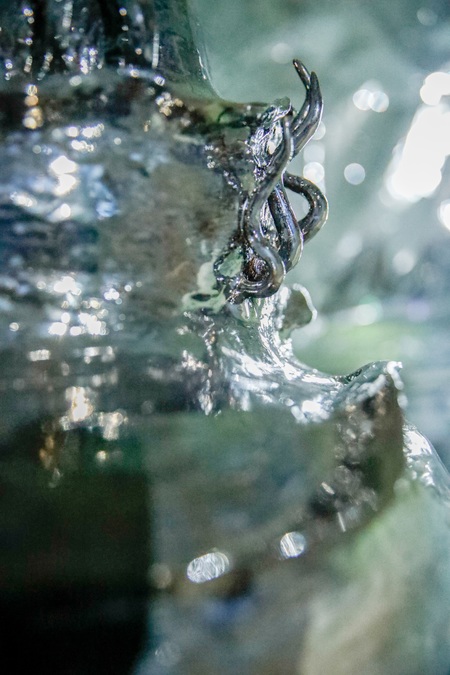
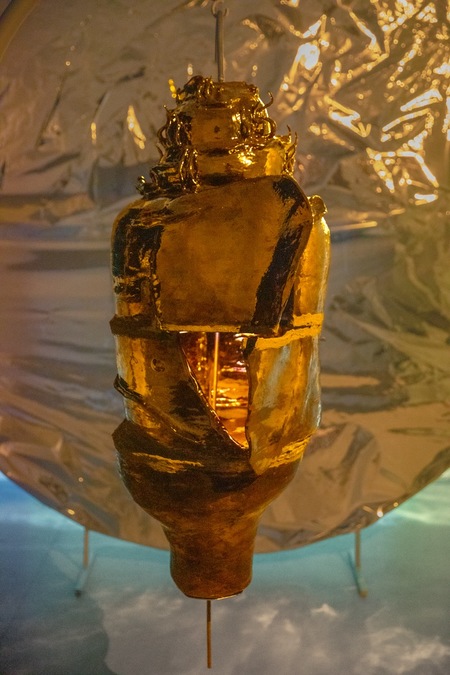
Valeria Guaimare, I Didn’t Cry For the Petrol (2026).
Meanwhile, other students turn their gaze towards contemporary global conflicts. The Venezuelan artist Valeria Guaimare presents I Didn’t Cry For the Petrol. Her suspended, mixed-material sculpture is wrapped in an iridescent surface, yet it's broodingly dark, glossy, reminiscent of oil. The fixture is striking, with its fluid details appearing almost extraterrestrial and alive. An onlooker's curious gaze at its unique beauty may be analogous to Venezuela’s historical position in global politics. A look inside the sculpture reveals a warm glow from within, accompanied by audio clips of the voices of a hurting population. The piece honours the Venezuelan people, their heart, their stories, and a country historically reduced to its material goods. Similarly, Amr Alsirawan pays tribute to his Syrian birthplace using worn, aged and scarred material, to symbolise the culture’s perseverance through relentless civil war.
Across painting, print and photography, artists explored personal narratives, such as identity, memory, heritage and sexuality. Others took to social critique, analysing the feminine experience and clear proclamations of techno-nihilism. Gen Z creatives hold a contradictory relationship with technology, wrapped up in both affectionate nostalgia and bitter resentment. The former is prevalent in the work of Emma Irving, whose Nintendo DS photo display evokes a feeling of childlike play. Techno-nihilism can be found in the paintings of Claire Mackenzie, whose Technophobia series homes in on tech infrastructure, its assertive presence in communities, and the paranoia it breeds from its obscured production and opaque intentions of private owners. Mackenzie succeeds at communicating the dreadful feeling of lost control and inherent suspicion through uneasy compositions and the unexpected combination of organic and industrial landscapes.
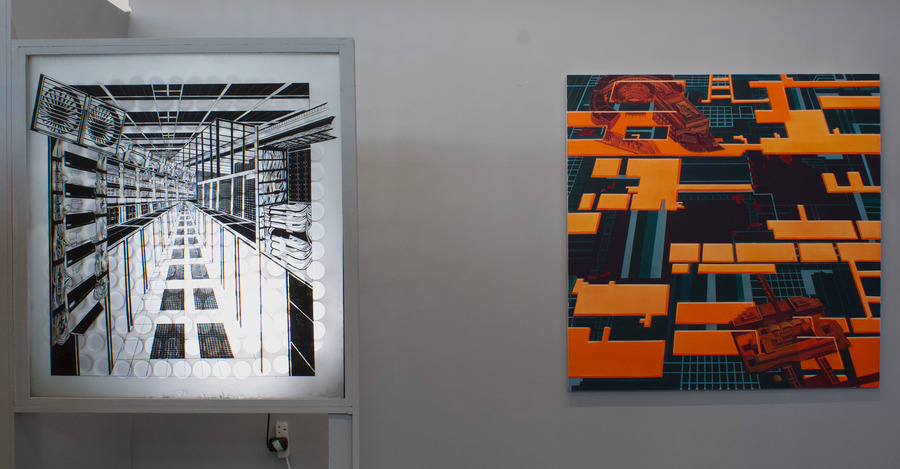
Claire Mackenzie, Technophobia (2026), courtesy of the artist
In a vivid expression of familial love, Evie Robinson presents a series of bright oil and pastel paintings, portraying scenes of Nigerian life, family and folklore. Accompanied by a blended soundscape of Nigerian streets and quotidian conversation, I was immersed in her mind, where memory and imagination merge. Through colourful, psychedelic imagery, she celebrates heritage and joins in the practice of storytelling that inspires her work. Similarly, Malak Naseem explores familial connection. Her work is layered and documentary, despite its first appearance as plain paper sheets. Informed by the artist’s Maldivian and Sri Lankan background, her prints beautifully archive family histories, leaving room for those faded and forgotten. A material of migration makes up this symbolic fabric; she uses packaging paper from her travels between homes and stitches them together with, as you will notice upon closer inspection, strands of her own hair.
Several painters share a through-line of femininity, imperfection and a pleasant element of strangeness. Allegra Lavinia Fleur finds her muse in sleepers and dreamers. Each subject is indulgently comfortable across their duvet, while voyeurs share in the intimacy of their sleep. Amy Blackbourne balances messy lines and raw seams with an eye for composition and pleasing colour pallets. Her dreamlike landscapes are playful yet severe, like the midnight etchings of a whimsical madman. Anna De Souza plays with space and dimension through their distorted etchings and paintings. Each scene feels as if you walked into a storyline with hazy plot points and mythical, charming details.
The 2026 Degree Show is a reminder of Glasgow’s fertile abundance of artistic ambition. Across each discipline, students portray distinct perspectives with creative fervour. Art devotees and casual consumers alike are sure to browse these young artists’ focused practice with delight.
GSA's Degree Show 2026 runs until 7 Jun