Barbie®: The Exhibition @ Kelvingrove Art Gallery, Glasgow
As irksome as the 2023 blockbuster, Barbie®: The Exhibition sells the Mattel brand through nostalgia thinly veiled as art
The pink walls look red through my phone camera, pointed towards a film from 1958 wherein Japanese factory workers file peach plastic heads then re-scalp them with synthetic hair which is permed by tiny screws and hard-boiled in place. If this was a contemporary art show, the film would be soundtracked by harmonic violins. Instead, it plays silently in front of a Barbie timeline that tracks, amongst other life-defining moments, the 2014 launch of @BarbieStyle on Instagram (which has since, the caption humbly tells us, "inspired a following of 2.9 million").
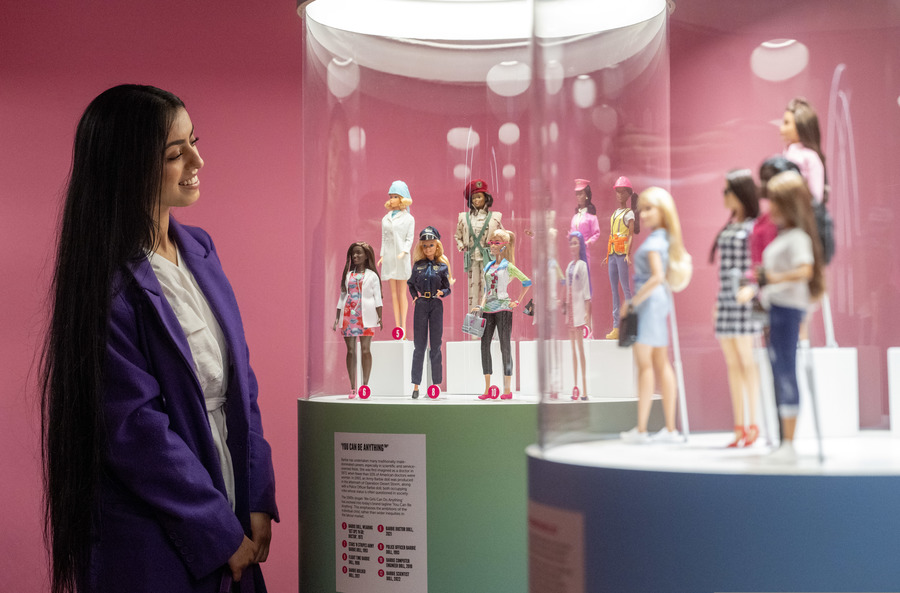
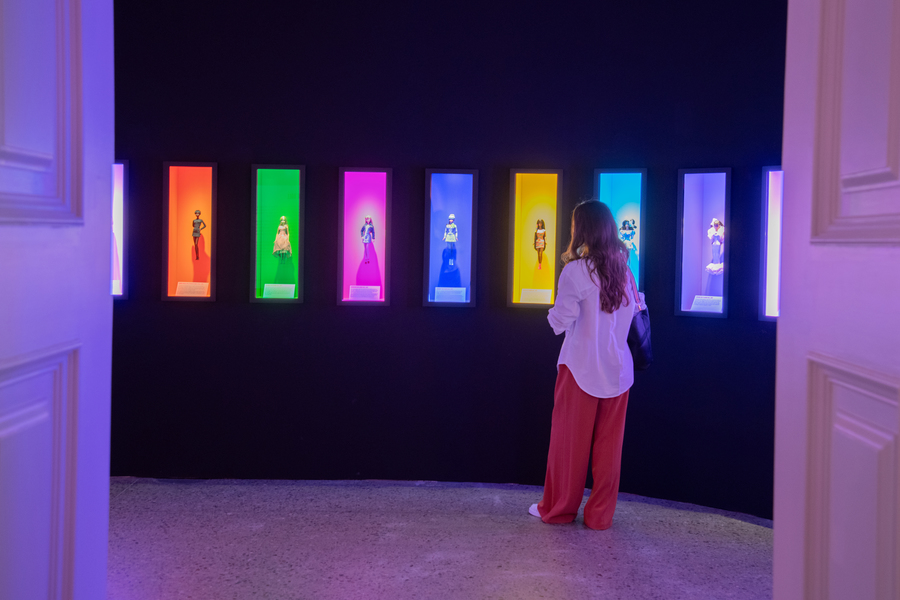
Barbie®: The Exhibition is currently on show at Kelvingrove Art Gallery and Museum until 18 October 2026. For four months, visitors can wander through an archive of America’s most marketed doll, with tickets priced from £8-16. The curatorial vision aims to show how Barbie reflects the "real world – at least as it relates to mainstream western consumer culture". Given the exhibition is presented by Glasgow Life in partnership with the London Design Museum and Mattel Inc., the reflection on display is unsurprisingly blurry.
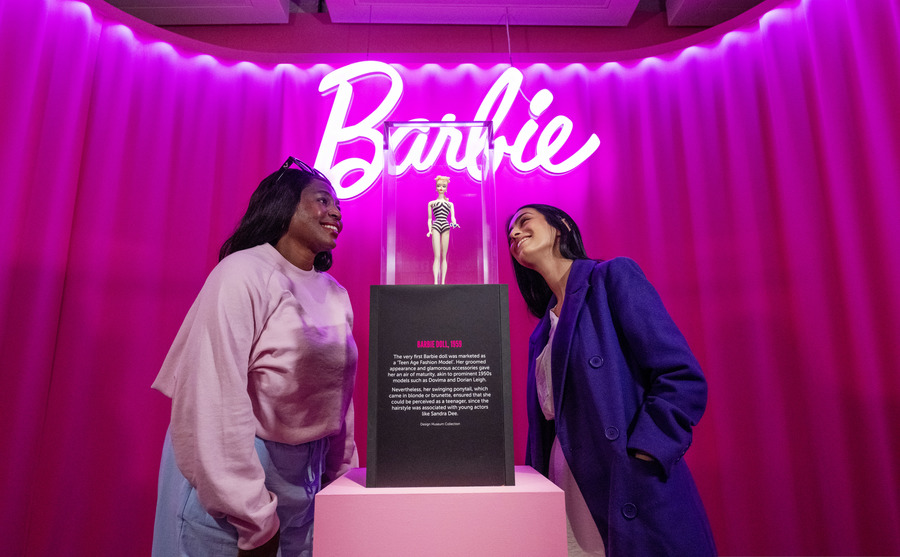
That this exit-through-the-gift-shop exhibition is ostensibly one big advert for Mattel is glaringly obvious. It makes no bones about the fact that Barbie is a brand sustained by some of the most effective marketing of the last 60 years. The first exhibit is not the first Barbie doll, but the 1959 TV advert to promote it. Each exhibit thereafter is accompanied by captions that relentlessly cite the commercial success of the brand and explain the techniques behind it with such sterile clarity they could collectively pass for a crash course in marketing and consumer psychology.
The enduring appeal of Barbie owes much to her convenient flexibility to bend far enough ahead of the times to seem progressive, yet not so far as to be radical. In a room that charts the changing architecture of Barbie’s dreamhouse, we see how she moved with wider social trends through 1970s van life in a counter-cultural campervan, to a 1990s tradwife in a neo-classical mansion. As the caption for the former tells us, by the time Barbie came to these trends, they were "sufficiently mainstream to influence the design of a children’s toy."
Just as it would be misdirected to critique Barbie for not being a more radical children’s toy, it would be naïve to expect a more radically honest reflection of American capitalism from a nostalgic exhibition co-presented by Mattel. Like Greta Gerwig’s 2023 movie, the exhibition is self-consciously careful to acknowledge the brand’s many controversies. While it makes righteous amends for some, such as Barbie’s one-size-fits-all femininity, it tiptoes around others, like the unsustainability of mass-produced plastic toys.
It is a testament to Mattel’s marketing that they can present this exhibition as a celebration of Barbie’s 'design innovation, craftmanship and creative processes' without attracting ire for ignoring accusations from China Labour Watch in 2024 of exploitative labour conditions in their factories. This despite the unsettling 1958 factory film that one man watching behind me described as: "Mr Ford’s heyday. Same thing day after day. It was soul-destroying."
Barbie®: The Exhibition is not entirely uninteresting – in the same way Disney adults are an absurdly fascinating sign of the times – though its interest is more in the power of nostalgia to obfuscate the present rather than anything Mattel has to say about 60 years of western consumer culture (namely, ‘it’s been good to us’). Because nostalgia sells, the exhibition will no doubt be a smash hit. If this year’s spate of venue closures across the city signals a strained culture budget, can we really blame Glasgow Life for Barbie-fying the ground floor of Kelvingrove for four months?
Well… a bit. Showcases like this profit by quick-money tourism that might be enough to sustain Glasgow’s museums until the next immersive experience; though they seem to belie a cultural policy that dazzles to distract from a lack of longer-term stability for local artists and independent venues, and a disinterest in everyday histories like that which the indefinitely shuttered People’s Palace sought to preserve.
That the exhibition may bring more visitors to the museum is a moot point if few of them venture upstairs. We can only hope that some choose to spend their money in the art gallery gift shop rather than pay £29.99 for an empty Barbie branded box [Doll not included].
Barbie®: The Exhibition, Kelvingrove Art Gallery & Museum, Glasgow, until 18 Oct