Artist Ilana Halperin on retrospective What is Us and What is Earth
Marking her Fruitmarket retrospective, Ilana Halperin tells us why the vastness of geological time calls for an emotional, profoundly human response
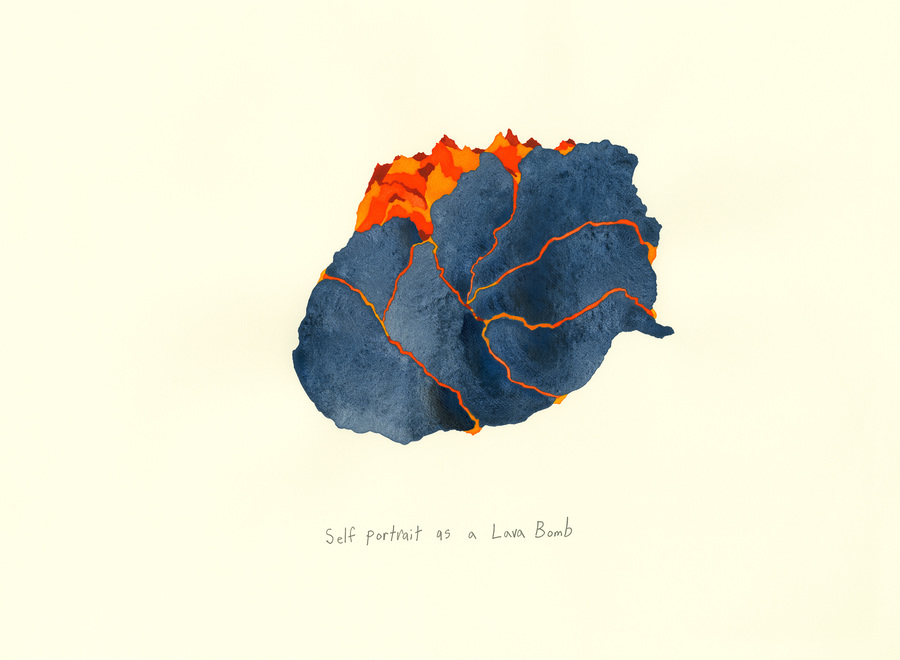
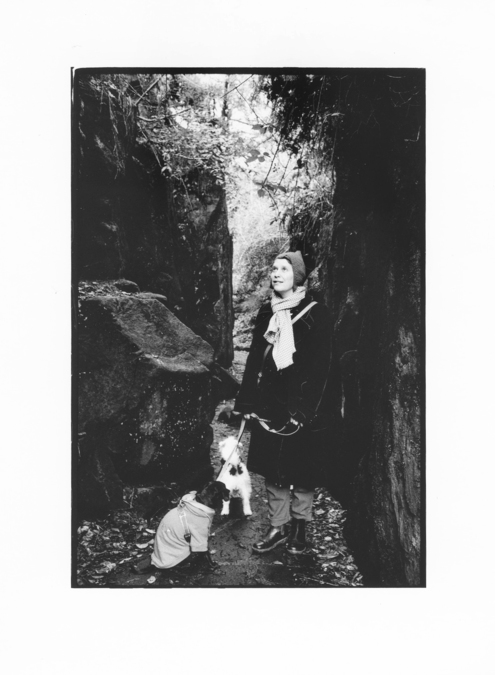
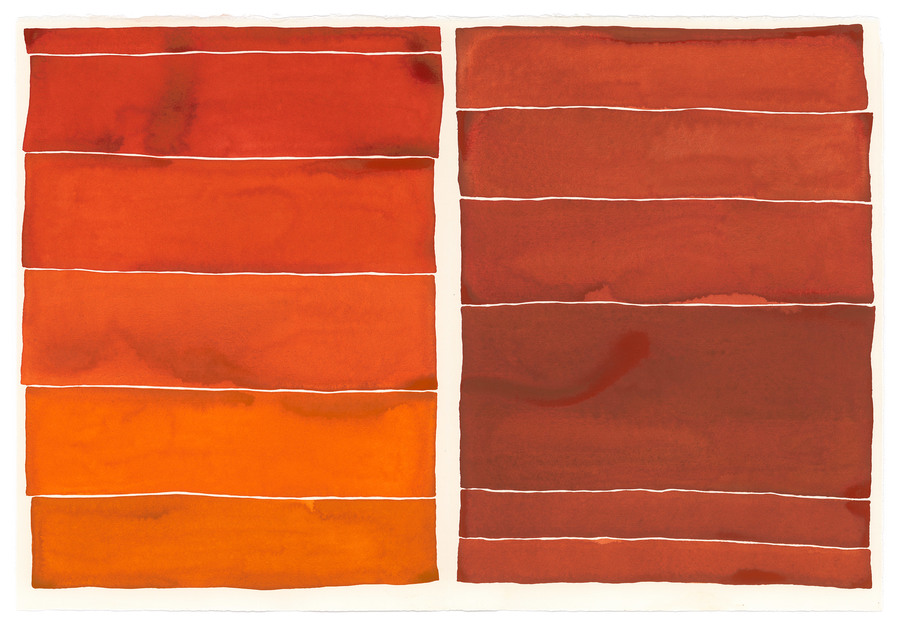
“We are made of calcium carbonate ourselves, with our teeth and bones,” Ilana Halperin tells me from her flat in Isle of Bute’s Kilchattan Bay, where she’s just arrived to collect some works that will feature in a forthcoming mid-career retrospective at Edinburgh’s Fruitmarket. “We are implicitly part of that calcium carbonate rock cycle.” Amongst the many memorable sentiments that Halperin’s art can leave you with is the uncanny feeling that we are, in some sense, literally made of the same stuff as the planet we walk on.
The name of that show, What Is Us and What is Earth?, gets across this strange feeling of enmeshment nicely. In an age of climate and nature crisis, we are relatively used to visual art which quickens our sense of connection and responsibility to the other animals with which we share the planet. To stir the same feelings of empathy with rocks and minerals – which we are more accustomed to think of as inert or dead – is an achievement indeed.
The exhibitions will feature work created across several decades which shows a focused and evolving kinship with geological matter. This includes new work in The Rock Cycle format which Halperin has developed over many years, presenting found and altered sculptural objects representing different stages in the Earth’s geological evolution. Usually, this involves scouring diverse geographical locations for examples of different rock types that have, over billions of years, turned into one another. As a dazzling conceptual flourish, these are deposited in the springs of the Fontaines Pétrifiantes de Saint-Nectaire in central France, whose water is so calcium-rich that the items grow a new skin of limestone in a matter of months.
Most recently seen in Scotland at Bute’s Mount Stuart House in 2021 (featuring pieces of pottery fished from the bay by Halperin’s home, site of an old brick and tile works), this technique creates chance-based sculptures in collaboration with sped-up geological processes. The resulting works, whose outer limestone layers contain ancient marine debris such as coral, shells, and algae, have a strange animal quality to them, fresh and pale as flesh, or exposed bone. The new instalment in the series to be shown in Edinburgh, The Rock Cycle (from stromatolites to diamonds), will reveal how 500-million-year old stromatolites, some of the oldest surviving lifeforms on Earth, evolved into limestone, which in turn metamorphosed into marble and allowed quartz to grow in its veins and cavities.
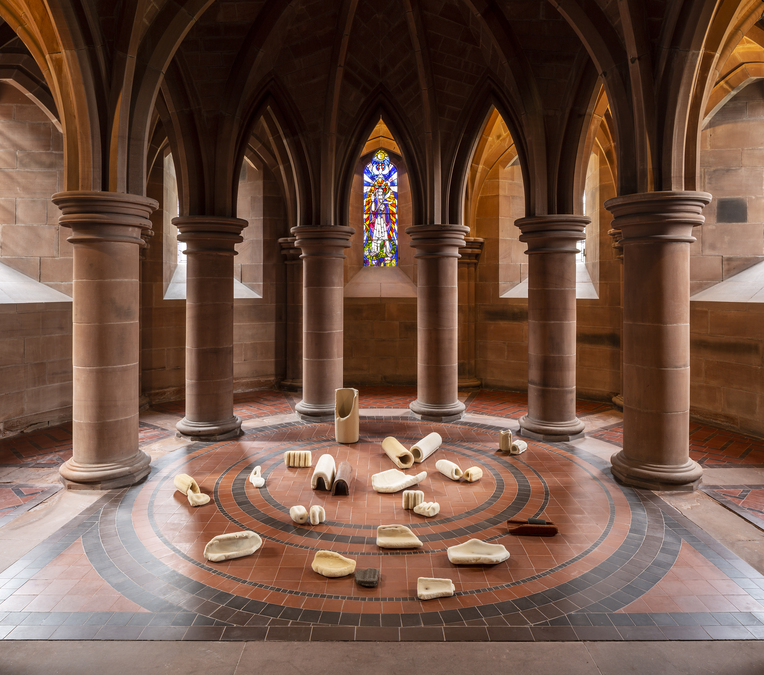
The Rock Cycle, 2021/2022. By Ilana Halperin.
As in all of Halperin’s work, connections to human life abound in this sequence, not only in the sense of emotional intimacy with rocks that she is able to muster, but through the biographical narrative woven into its creation. The idea for The Rock Cycle (from stromatolites to diamonds) came to her during a 2022 residency at Mass MoCA in the Berkshire Mountains of Massachusetts and New York, an area which she had “deep memories” of from family holidays during her Manhattan childhood. “I did a lot of clambering round birch forests with my siblings, damming small streams – really treasured memories.”
Researching the area in depth for the first time, Halperin discovered that it was close to Herkimer county, home of the famous Herkimer Diamond, a kind of quartz that, due to its clear body and intricately faceted surface, has been used as a diamond substitute by everyday Americans for centuries. When a local geologist pointed out that Herkimer Diamonds were lodged in dolomitic limestone, which is not only formed from ancient stromatolites but also grew into the Ledmore Marble found in the north of Scotland, the seeds of an intercontinental geological story were planted, one which mirrored Halperin’s own journey from the USA to Scotland.
Halperin has always been compulsively interested in rocks, she tells me, ever since making a soapstone rabbit at summer camp aged 11. She went to a music and arts-focused high school, “so I was able to focus on sculpture and stone-carving from the age of 15. Growing up in New York, I remember climbing on rocks in Central Park covered in mica and clambering around the hall of rocks and minerals at the Museum of Natural History playing hide-and-seek.” Her “obsession” with stone-carving carried her through an apprenticeship at a carving workshop (“holding alabaster up to the sunlight made me realise the fleshiness of stone, seeing the pink veins in it”) and degrees at Brown University, Rhode Island and Glasgow School of Art.
But ultimately, learning about the scientific make-up of rock took her away from sculpture in the traditional sense towards what she calls “geological intimacy,” a set of techniques that frame and celebrate the inherent qualities of rocks and minerals for their own sake. This is what audiences will get a sense of at the Fruitmarket, not only through Halperin’s new Rock Cycle, but through works exploring Martian geology, a range of abstract, interpretive maps and watercolours, and lots more. This is a chance to experience a major body of ecological art in the round for the first time: not to be missed.
Ilana Halperin: What is Us and What is Earth, Fruitmarket, Edinburgh, until 17 May, Mon-Fri, 11am-6pm, free entry