Vennels: the new exhibition celebrating Perth’s 'Little Streets'
At Perth Museum, a new exhibition explores the backstreets and alleyways that run through the UK's only UNESCO City of Craft and Folk Art
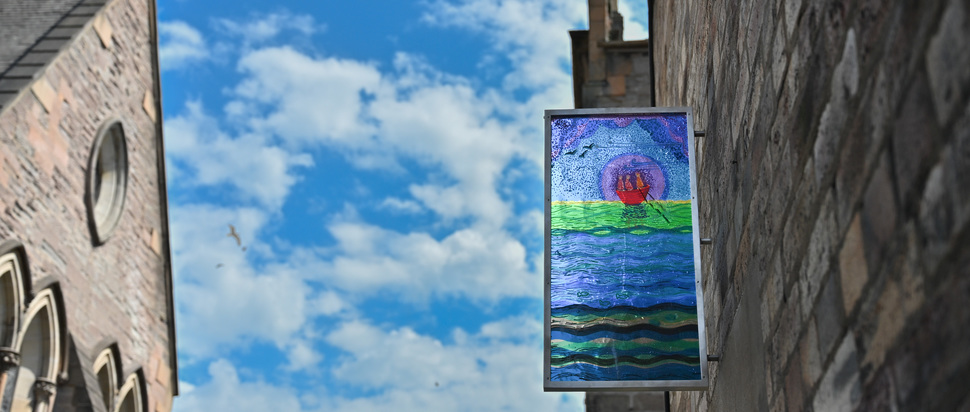
A vennel is a narrow lane that runs between the gables of two buildings. In Perth, they cross the streets like ancient arteries through which the makers’ histories of this craftis toun (‘craft town’) flow. Drawing those histories out from the sidelong shadows of these wee lanes, Vennels: Perth’s Little Streets is an exhibition that balances local stories with global resonance, offering a chance to affirm Perth’s ingrained cultural significance.
Throughout the medieval and early modern ages, Perth was a military and religious centre of the Kingdom of Alba – owing to the nearby Scone Abbey which at one point housed the Stone of Destiny on which every Scottish King and, latterly, English monarch was crowned. Invaded, walled and gated in a six-century long oscillation between Scottish and English power, the city has historically occupied a kind of borderland in central Scotland.
Perth’s vennels reveal its history as an ancient craft town, through which traders would travel from across the country to buy and sell their wares. Lanes like Ropemakers Close and Weaver Vennel signpost the long-held craft traditions of local makers – traditions recognised in 2021 when Perth was named the UK’s only UNESCO City of Craft and Folk Art. The title positions Perth in a global network of 102 cities, though, as Poppy Jarratt, UNESCO Programme Officer for the city says, "it’s a lot harder to say 'come to Perth and look around'" than the likes of Cairo or Santa Fe.
Jarratt’s aim through this exhibition and her continuing work in the city is to make sure Perth is firmly centred on that global stage. This cannot be achieved, however, without first nurturing civic pride at home. Alan Farnington (who works for Perth and Kinross Council and is responsible for commissioning new artworks for the exhibition) is cautious of not isolating locals in Perth’s outward-looking, culture-led approach to placemaking.
Speaking from the council’s perspective, he says candidly, "There’s always a sort of negativity towards putting money towards arts and not filling in potholes and what have you." While he feels the museum, which opened in 2024 after a £27 million regeneration project, "has done a fantastic job" and "exceeded expectations even locally," he is hyper-aware of the need to continue making the case for cultural investment to a "negative vocal minority." One of the ways to do that, he hopes, is to "tell the story of the place" through "public art in the public realm," beyond the sometimes-isolating threshold barriers of a museum.
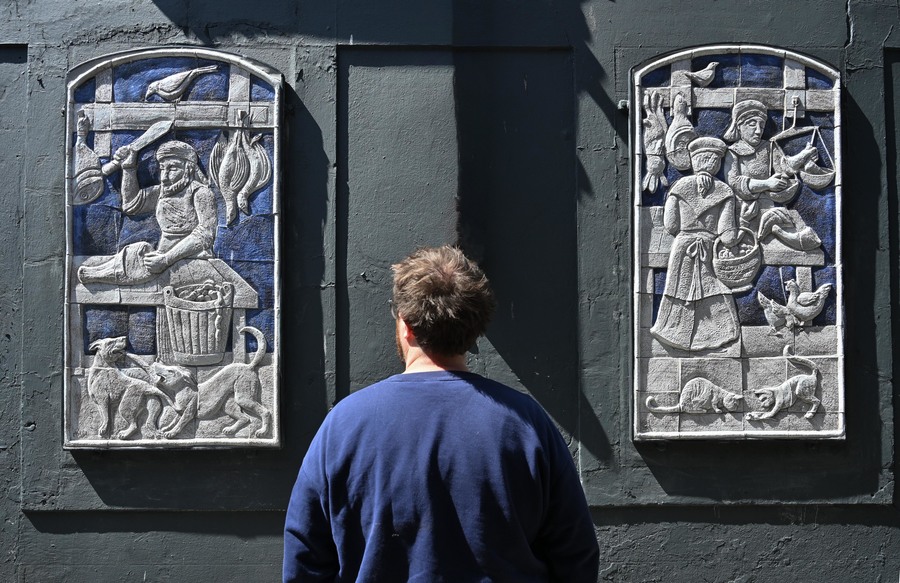
Alongside the museum’s exhibition of rarely seen archival photographs and archaeological findings then, Vennels: Perth’s Little Streets will also feature five newly commissioned public artworks by artists based in Scotland and Ireland. The artists’ practices span ceramics, sculpture, graphic design, textiles, murals and sign-making, though their new works are allied in their engagement with Perth’s craft heritage.
These works are part of a broader series of council-led public art commissioning which began in 2019 with Elizabeth Ogilvie’s homage to the River Tay projected on the facade at Burt’s Vennel. This was followed in 2022 with a light piece by Turner-nominated artist Nathan Coley entitled The World Without And The World Within, Sunday Talks With My Children, which hangs in Cutlog Vennel.
Both pieces are inspired by the work of Scottish polymath Patrick Geddes, who was an alumnus of Perth Academy and one of the first advocates of the ‘Think globally, act locally’ concept in sociology and urban planning. Contemporary placemaking efforts in Perth seem rooted in Geddes’ philosophy, using public art and local heritage as the bridge towards global thinking on sustainability, fair trade and the protection of endangered crafts.
The Vennels exhibition, viewed alongside these public works, helps define a contemporary identity for Perth rooted in its ancient streets, like unchanging threads continually woven in new ways. With the Stone of Destiny now encased in the museum, returned only in 2024 after nine centuries, Perth seems on the way to setting its national history in place to move beyond it. As Farnington says, "For the size of the city, Perth punches well above its weight in terms of its cultural offerings." By nourishing the global resonances of that culture, Farnington hopes to give residents a reason to champion it while proudly feeling like “this is ours.”
Vennels: Perth's Little Streets, Perth Museum, until 6 Sep