Turbulent Times: RSA New Contemporaries 2026
In the 200th anniversary of the Royal Scottish Academy, Scotland's most-promising art school graduates explore a range of sociopolitical issues, from disability representation to technological dominance
For the past 17 years, RSA New Contemporaries has offered an insight into how Scotland’s emerging artists have spent their art school years. In 2026, the Royal Scottish Academy celebrates its 200th anniversary. 200 years of nurturing Scotland’s artistic talent is celebrated through an in-depth exhibition programme held at The Mound, complemented by exhibitions from 70 partners across the country. Against this context, RSA New Contemporaries takes on a new resonance, as 64 graduates – chosen from the 2025 degree shows – display painting, sculpture, moving image, photography, printmaking and performance (to name a few).
If you made it to the 2025 Glasgow School of Art Show, you might recall a giant sock monkey hanging outside the Stow Building. Nearing 50ft, this sculpture – and its creator, Emilia Evans-Munton – won a Guinness World Record for being the largest sock monkey. Evans-Munton inflates childhood nostalgia through her sculptural practice and encourages onlookers to engage with her work with a child-like inquisitiveness. In her presentation at RSA, she turns to the ephemerality of sandcastles to probe the impossibility of preserving memories. Through her material and technical choices, the artist undermines the hierarchies between fine art and crafts, which is why she wanted to bring sand-sculpting into an institution like the RSA.
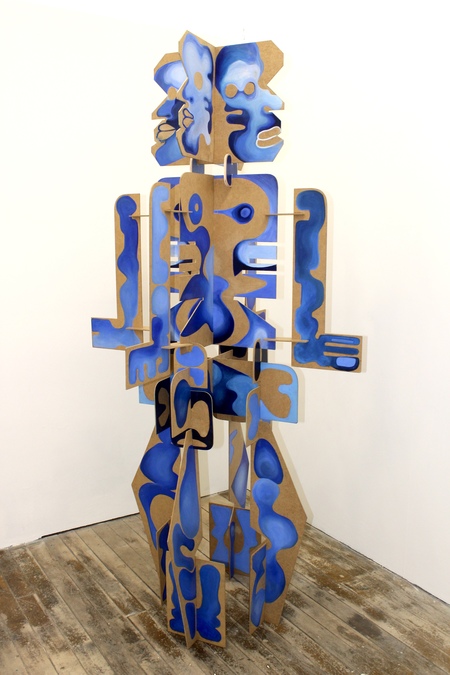
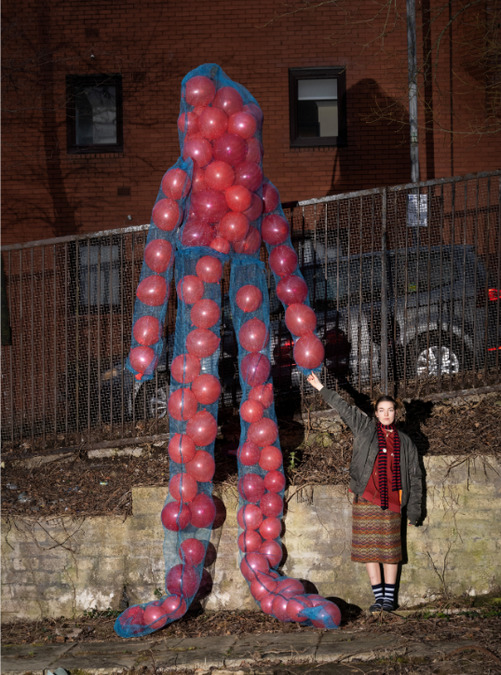
Another Glasgow School of Art Graduate, Iris May, similarly negotiates non-traditional materials and processes to challenge what constitutes a sculpture for public display. Combining abstract painting and assemblage, her flat-pack, humanoid sculptures offer multiple configurations and, in the words of the artist, companionship. May’s practice began during the COVID-19 pandemic; the effects of this crisis continue to linger in arts education. She acknowledges that the confrontation of loneliness drives her practice forward as she continues to expand her series of collapsible sculptures.
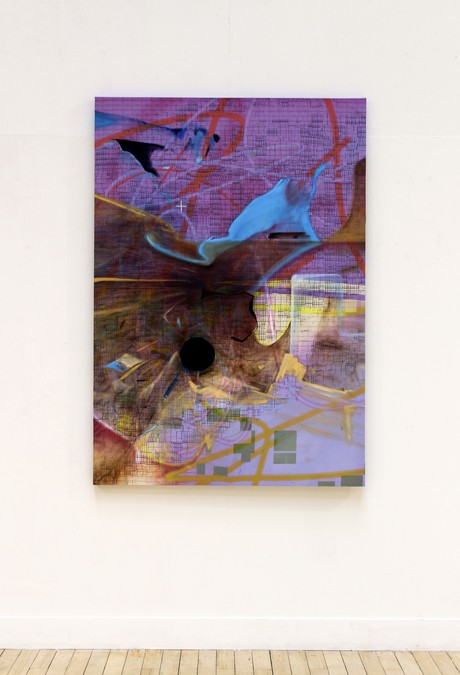
This feeling of disconnection infiltrates the paintings of Edinburgh School of Art (ECA) graduate, Rosie Hodgson Smith. At first glance, her abstract paintings are whimsical strokes of effervescent colour. On second glance, they begin to glitch. Suggestively, the paintings are coded with 'internet archaeology,' and underneath the whimsy, it’s like staring into a circuit board as we come face-to-face with the technology that has us hooked and hungry. Through her practice, Hodgson Smith interrogates the art of off-screen looking and considers how being online detrimentally impacts our attention spans and critical thinking.
From painting to performance, Fev Buchanan examines the 'differently-abled body in resistance.' The ECA graduate’s presentation at RSA New Contemporaries brings together documentation of her performances, rooted in her experiences navigating an ableist world as someone with a chronic illness. She regards her performances as 'acts of survival' or 'rituals of vulnerability and refusal' and invites onlookers to witness rather than pity. Following graduation, Buchanan held her first solo exhibition, called The Performing Body, at Gleneagles Townhouse at St Andrew Square.
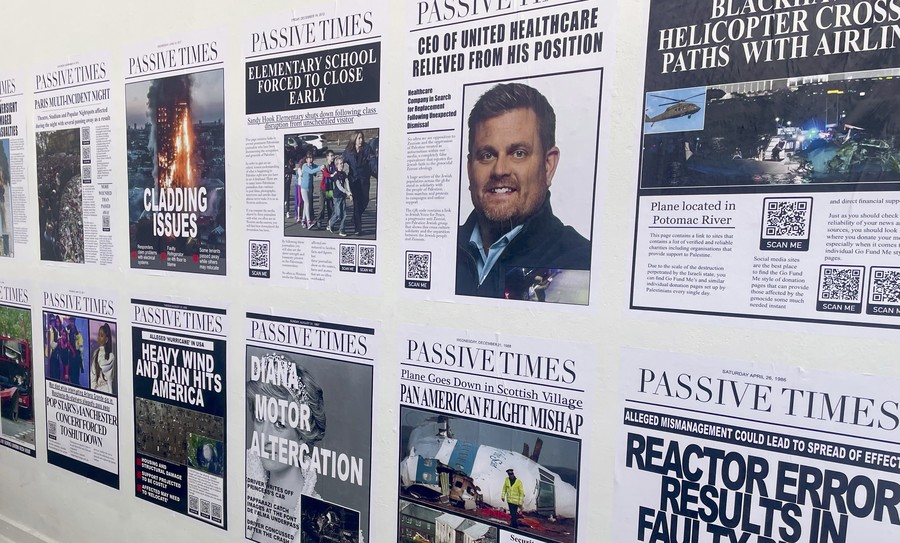
Finn Millar’s work further brings an activist dimension to RSA New Contemporaries. A graduate of Duncan of Jordanstone College of Art & Design (DJCAD), Millar identifies as a political artist, drawn to art as a tool to educate viewers about social issues. Alongside his graphic design and film work at art school, he organised student protests, supported staff strikes and participated in Palestinian resistance protests – he views these acts as integral to his practice. His Passive Times newspaper series has a dystopian edge: he repackages well-known tragedies, from school shootings to plane crashes, and reduces them to trivialities through language and design. In this way, Millar highlights and ridicules a crisis of desensitisation to violence and destruction.
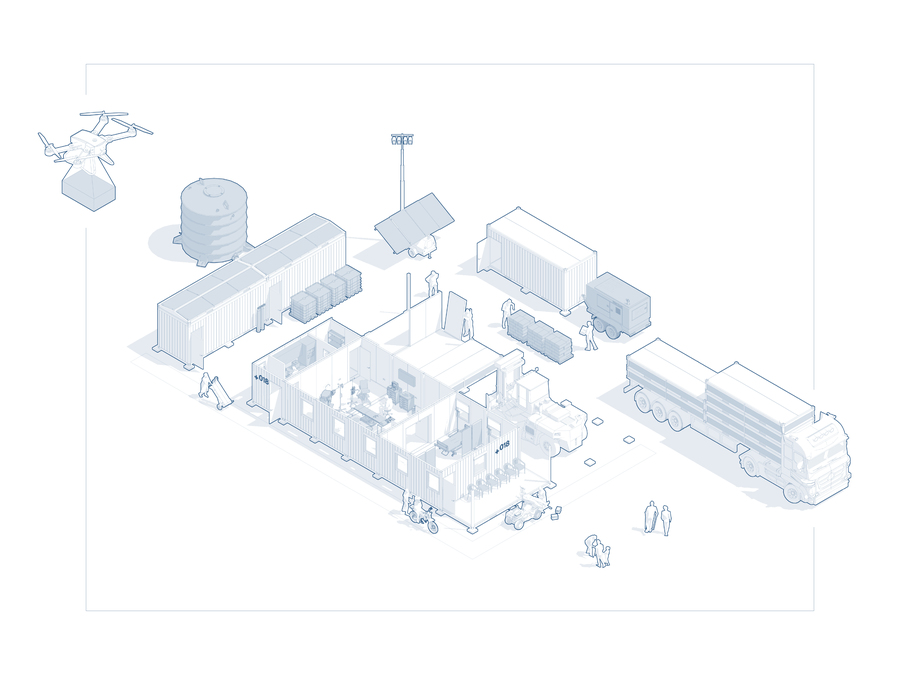
Likewise with Drew Rumgay, social justice is inseparable from his art. Rumgay studied Architecture to postgraduate level at DJCAD in his hometown of Dundee. There, he created CareKit: The Right to Heal, a speculative, modular building system designed to respond to humanitarian crises. The barbaric restrictions to healthcare in the Gaza Strip and surging global conflicts motivated CareKit: The Right to Heal. Seeking to challenge institutionalised hospital models, Rumgay is instead informed by Peter Kropotkin’s philosophy of ‘mutual aid’ to improve resource efficiency and foster equitable access to care in low-resource environments.
This year’s RSA New Contemporaries showcases how emerging artists and architects are responding to political turmoil and the accompanying sense of desensitisation. Themes that also emerge include nostalgia, overwhelm from technological dominance and the search for social acceptance. During the course of the exhibition, one outstanding emerging artist will be awarded The Skinny Prize, which includes an interview feature in a future issue of the magazine, charting the development of their practice and career.
RSA New Contemporaries 2026, Royal Scottish Academy, Edinburgh, until 22 Apr, Mon-Sat 10am-5pm, Sun 12-5pm, £8/£5 concession (Free for RSA Friends)