GSA Degree Show 2026: MDes Communication Design
For students on the MDes Communication Design programme this year, location and surroundings appear as a framework exploring how images, narratives and landscapes shape, fix, or unsettle the ways in which people are defined
The MDes Communication Design programme brings together graphic, illustrative and lens-based practices, encouraging students to develop their own visual narratives articulated through an engaging and adaptable visual language. This cross-medium approach gives students the space to shape, experiment and communicate their work in varying contexts.
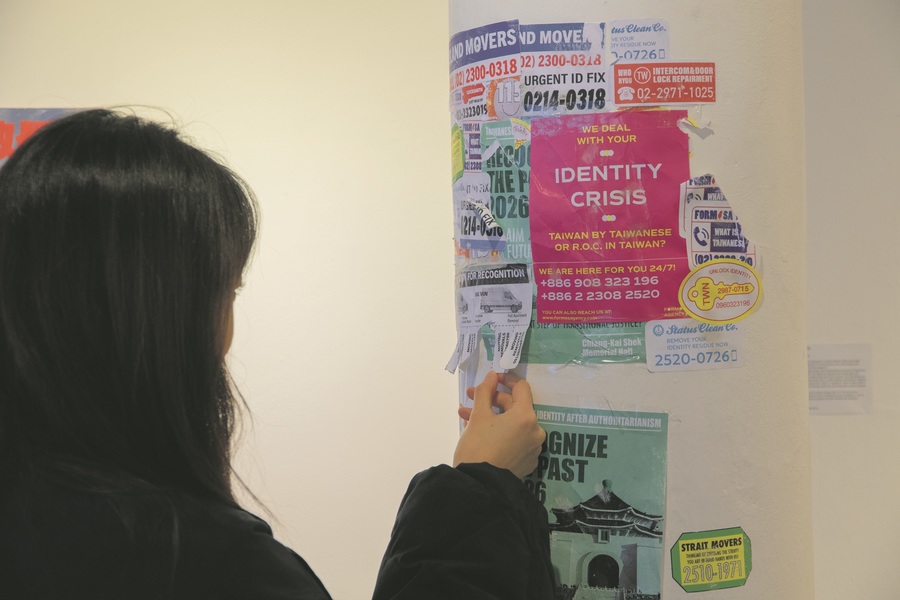
Winnie Wang’s publication Tâi-uân Gín-á is a witty and playful body of work, delving into the identities of Taiwanese children, while engaging with Taiwanese Hokkien. Unfolding over a three-part structure, Wang takes us on a journey tracing her generation’s relationship to national identity and examines how identity is formed. Centring on the 'Naturally Independent Generation', Wang’s intention for starting the project was inspired by the Great Recall Movement of 2025. She invites us to consider the question – is Taiwan the Republic of China, or does Taiwan belong to the Taiwanese people? Recontextualisation is at the core of Wang’s approach. Using authentic materials and objects, she introduces humour to offset the seriousness of political issues. Bringing cultural significance and Taiwanese aesthetics into the publication and with a small gesture of wit she remarks, “some still may not know their identity, as the moon blocks are hanging in the air.”
Ó na Cruacha is a pulication by Hannah Grajciar which centres on archival information within the Monoglot Gaeltacht community of the remote Croagh’s region of Tír Chonaill, Donegal. Grajciar, a native of Belvidere, Illinois, was inspired to create this piece through family heritage in Ireland. Offering insight into the rich language and culture that has survived to the present day, Grajciar carefully selected three songs to bring to life through illustration. This includes hundreds of pieces of folklore, collected by folklorist Seán Ó hEochaidh in the mid-twentieth century from Anna Nic an Luain, who lived all of her life in the shadows of the Blue Stack Mountains. Grajciar acknowledges that the mountains are not just a backdrop but are a part of the stories themselves. Celebrating the seanchaí tradition, Grajciar reflects on a time when oral storytelling was a primary means of passing knowledge, values and history between generations.
Winnie Wang.
Blending recorded histories with speculative interpretation is at the heart of this work; in doing so it resists fixed narratives and instead proposes a more fluid, affective archive, one that centres women’s voices and the living nature of oral cultural tradition in the Croagh’s and beyond. Within the region, identity is carried through language. Grajciar presents to us a foreground of the often underacknowledged role of women as custodians of community memory. This role in the community is influential and rooted in lived experience. Grajciar’s work is a wonderful preservation piece, carrying centuries old traditions, into the present day.
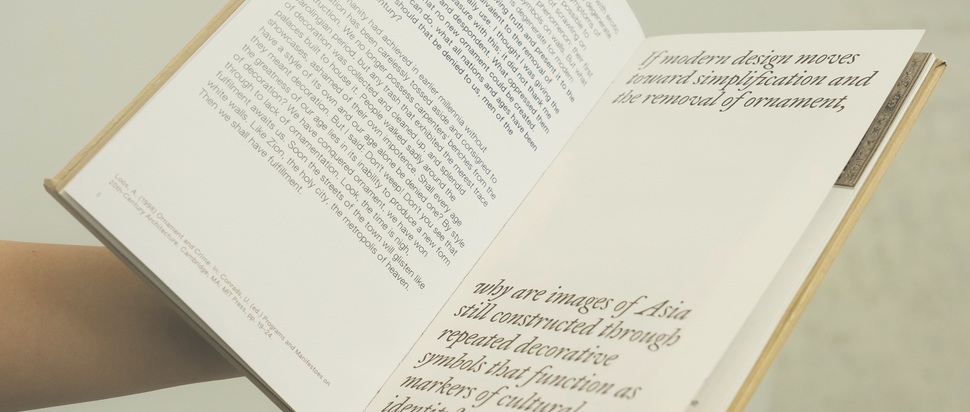
Shuhan Jia presents a two-part publication blending illustration and graphics – Orientalism and the Feminised East: Bodies as Threat, Bodies as Ornament and Orientalism and the Ornamentalism: Signs as a Surface, Signs as Myth. This structure introduces a focus on visual elements. It invites us to consider stereotypes and misrepresentation of Asian women in Western media and film, in parallel with Chinoiserie, where East Asian design features are disproportionately emphasised and presented as ornaments, while misrepresenting the realities of Asian culture. Jia asks the question – "is misrepresentation the only way to design?" Delving into works such as Madama Butterfly, and films such as Memoirs of a Geisha and The Teahouse of the August Moon, Jia chooses not to focus on a sense of victimhood, but questions how visual representations of East Asia inspired design in the West in a way not indicative of real life.
Juntao Yuan’s photographic zine Water of Life is a truly captivating body of work, skilfully produced through the technical discipline of photogram printing. Carefully composed and visually considered, it examines Uisge Beatha, the Water of Life and the cultural role of Scotch whisky, tracing its shift from medicinal purposes to national spirit. The title foregrounds both the original Scottish Gaelic term and the anglicised evolution – from uisge to usky and eventually whisky. Working from visits to several distilleries, where water is taken from local sources before being transformed through distillation, the publication situates whisky within its material and cultural landscape. The result is a measured, poetic study of a practice deeply embedded in Scotland.
Storytelling, music, and film form the basis of work across the cohort, anchoring projects that open up a shared experience of how environments shape meaning.
MDes Communication Design, Reid Building, 29 May-7 Jun