GSA Degree Show 2026: Innovation and Technology
The work of students at SIT embodies the space where future and present overlap, in the intersection of art and technology
The School of Innovation and Technology (SIT) develops design skills, focusing on how innovation and technology impact and aid future society. Offering various specialisms and degree pathways, students at SIT showcase a variety of self-initiated projects, reflecting the ethos of understanding and future thinking taught on their programmes. This year, ‘doing good’ is at the forefront of graduating students' minds, with almost every project sharing a common goal of creating work that instils hope and tackles problems facing societies, especially those within Scotland.
Declan Murphy, a student of Immersive Systems Design – 3D Modelling, and a self-described “generalist in 3D”, showcases a wide variety of projects, each sharing a common lens of interacting with audiences through digital simulation. Murphy delves into a diverse range of aspects within modelling and simulation. With work exploring simulated explosions as they appear in media, Murphy experiments with the physics of 3D explosion simulation and evaluates the interplay and differences of viewer expectation, which has been impacted by the unrealistic exaggeration of film pyrotechnics when compared to real detonations. Elsewhere, investigating the design of club visuals, Murphy also models a 3D environment of Manchester's Warehouse Project to create visuals designed to play behind the song always believed by sim0ne, a design balancing both the emotional and artistic value of the song with the needs of the space. Finally, exploring heritage on the Isle of Iona, Murphy showcases an XR visualisation of Iona Abbey.
Similarly, exploring heritage and life on the islands and coasts of Scotland, Joseph Hunter, a Product Design student, explores the coastal communities' relationship with the viable byproducts of scallop shells. Inspired by his own experiences of the Scottish coasts, his project centres on turning byproducts into viable products in three distinct opportunities: personal, industrial, and speculative, proposing circular economies for the life cycle of a material.The Product Design programme provides students with the opportunity to explore various aspects of design with the aim of developing personal practice and encouraging students to refine their lens and methodology from speculative to system design, often with community and social understanding at the heart.
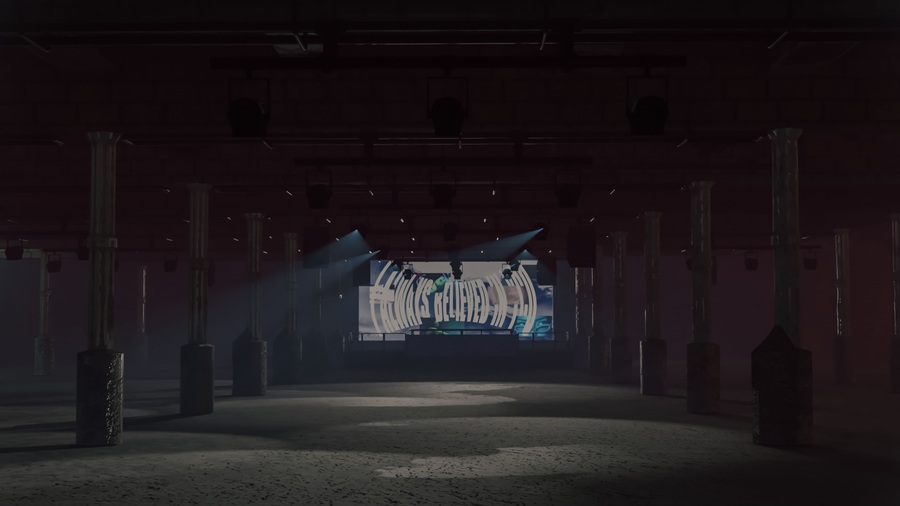
Declan Murphy, Immersive Systems Design.
Cairn, a project by Product Design student Alisdair Haig, aims to foster community connection to woodland restoration through the monitoring and removal of the rhododendron ponticum plant. The project is a multipart system consisting of soil monitoring equipment and an output hub that utilises soundscapes to notify communities of outputs, allowing the care of land to be placed within communities rather than authority bodies.
Maya Lo’s project, How Do You Spell Scotland, deeply investigates the diverse experiences of Scottish identity, more specifically young female Scots. It takes the form of a community exhibition inviting visitors to explore what identity and belonging mean from different perspectives through reflection and language, with the end goal of facilitating tangible examples of community understanding and seasonally rotating curatorial work.
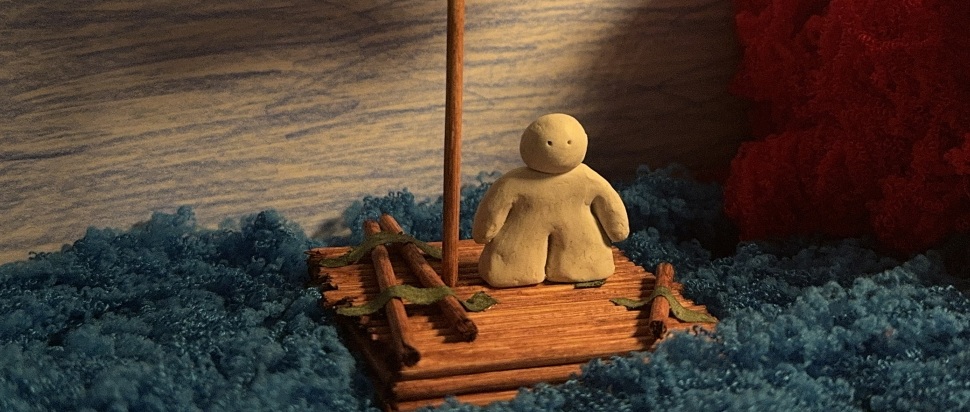
The Sound for the Moving Image programme showcases students working on exploring the relationship between conceptual and technical sound skills, developing its symbiotic nature with various visual outputs. Jessica Payne demonstrates the relationship between sound and emotion, specifically the gender expression surrounding screaming, working with abstract audio-visual works. Payne detaches the emotions of screaming from the human body, investigating the subject through the visual method of clay stop motion, inspired by the works of Kaja Silverman and Anne Carson. Secondly, Payne also presents an eternal loop stop motion film, an allegory for menstrual depression, following a character who wakes up on a beach, attempting to build a raft while a wave resets their progress.
Across the School, whether working through sound, product, simulation or any other approach, there is a wider lens and a common theme of doing good. Through connection with people, land, and heritage, there is an underlying tone of hope in many works across the Degree Show, reflecting on the designers’ personal lenses on practice through their own pathways of design: Digital, Product or Sound.
School of Innovation and Technology, Haldane Building, 29 May-7 Jun